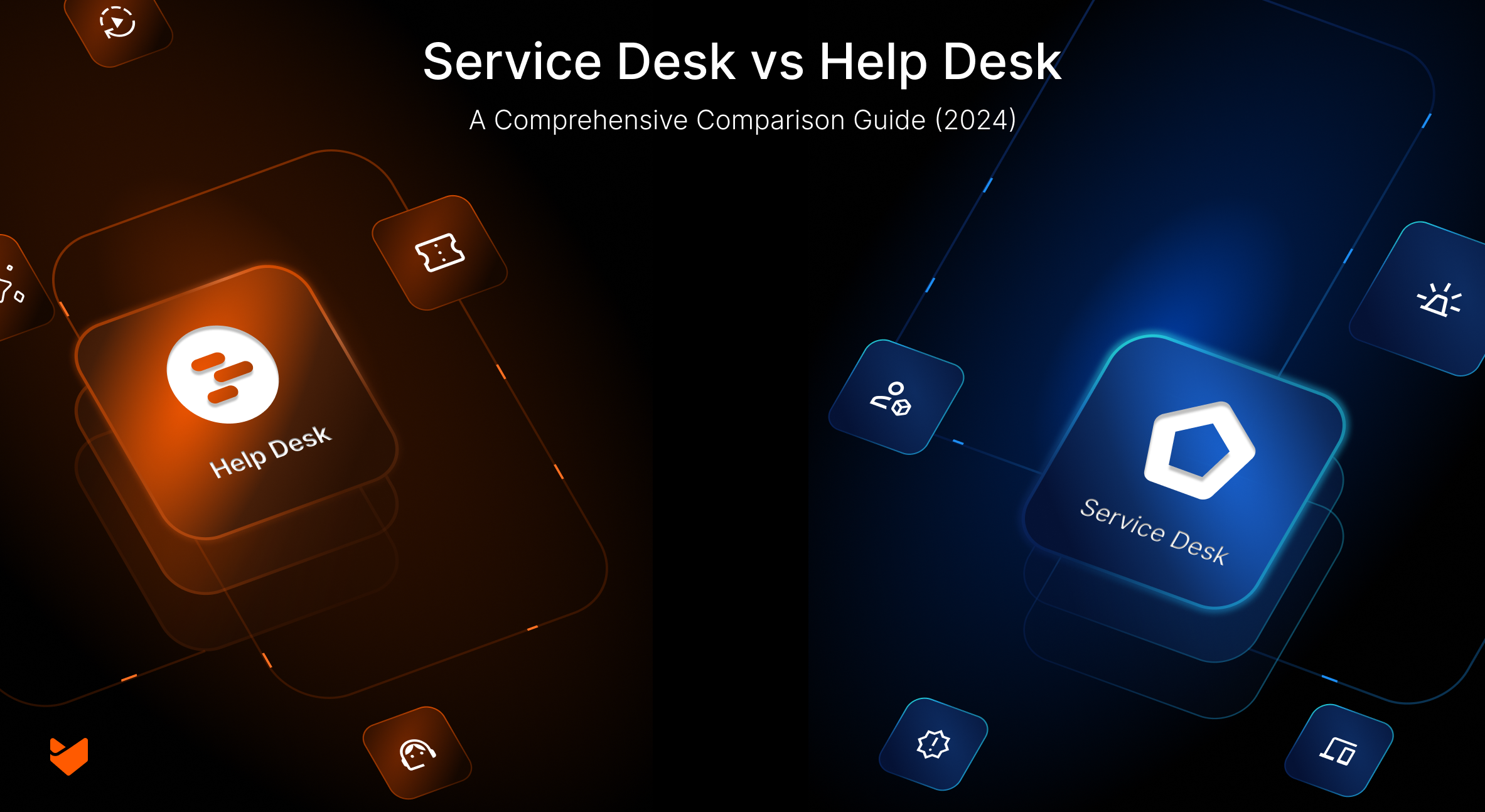
In IT support, “help desk” and “service desk” are often used interchangeably, yet they serve distinct purposes. This comprehensive guide will help you understand the key differences between these two support solutions. It will help you determine which one best suits your organization’s needs.
Key Differences at a Glance
| Aspect | Help Desk | Service Desk |
| Primary Focus | Technical issue resolution | End-to-end service management |
| Approach | Reactive (break-fix) | Proactive and strategic |
| Scope | Narrower, incident-focused | Broader, service-focused |
| Business Alignment | Task-oriented | Process-oriented |
| Service Model | Issue resolution | Service lifecycle management |
Understanding Help Desks
What is a Help Desk?
A help desk is a technical support function that resolves specific IT issues and incidents. It operates on a “break-fix” model, providing immediate assistance when problems occur.
Primary Functions of Help Desks:
- Technical issue resolution
- Password resets
- Software/hardware troubleshooting
- Basic IT support
- User assistance
Key Characteristics:
- Reactive Nature
- Responds to issues as they arise
- Focus on quick resolution
- Issue-by-issue approach
- Technical Focus
- Emphasis on IT problems
- Direct user support
- Immediate solutions
- Metrics
- Resolution time
- First-call resolution rate
- Number of tickets resolved
- User satisfaction
Understanding Service Desks
What is a Service Desk?
A service desk is a more comprehensive support solution. It acts as a single point of contact (SPOC) between IT services and users. It manages the complete service lifecycle.
Primary Functions of Service Desks:
- Incident management
- Problem management
- Change management
- Service request fulfillment
- Asset management
- Knowledge management
Key Characteristics:
- Strategic Approach
- Proactive service management
- Long-term solutions
- Business process alignment
- Comprehensive Scope
- End-to-end service management
- Multiple ITIL practices
- Business strategy alignment
- Metrics
- Service level agreement (SLA) compliance
- Business impact analysis
- Service availability
- Process efficiency
When to Choose Each Option
Choose a Help Desk When:
- Your organization needs basic IT support
- The focus is primarily on resolving technical issues
- You have a smaller IT infrastructure
- Budget constraints exist
- Immediate issue resolution is the primary goal
Choose a Service Desk When:
- You need comprehensive IT service management
- Business process alignment is crucial
- You’re implementing ITIL practices
- A long-term service strategy is important
- You require broader service management capabilities
Key Features Comparison
Help Desk Features:
- Ticket Management
- Issue tracking
- Basic routing
- Resolution documentation
- Communication Tools
- Email integration
- Basic chat support
- Phone support
- Knowledge Base
- Basic troubleshooting guides
- FAQs
- Solution documentation
Service Desk Features:
- Service Management
- Complete ITIL alignment
- Service Catalog
- Change management
- Asset management
- Advanced Analytics
- Service level reporting
- Trend analysis
- Performance metrics
- Business intelligence
- Process Automation
- Workflow automation
- Self-service portals
- Integrated knowledge management
- Advanced routing
Implementation Considerations
Help Desk Implementation:
- Requirements
- Basic ticketing system
- Communication tools
- Issue tracking capability
- Resource Needs
- Technical support staff
- Basic training
- Standard operating procedures
Service Desk Implementation:
- Requirements
- ITSM platform
- Process framework
- Integration capabilities
- Reporting tools
- Resource Needs
- Trained ITIL staff
- Process documentation
- Change management
- Continuous improvement
Best Practices for Success
General Best Practices:
- Clear Objectives
- Define support goals
- Establish metrics
- Set performance targets
- User Experience
- Simple interface
- Multiple contact channels
- Self-service options
- Continuous Improvement
- Regular review
- User Feedback
- Process optimization
Technology Considerations:
- Integration Capabilities
- Current systems
- Future needs
- Scalability
- Automation Options
- Workflow automation
- Self-service
- Knowledge management
Making the Right Choice
To choose between a help desk and a service desk, consider:
- Organizational Needs
- Current support requirements
- Future growth plans
- Business objectives
- Resource Availability
- Budget
- Staff expertise
- Training capabilities
- Process Maturity
- Current IT processes
- ITIL adoption level
- Change readiness
Conclusion
Help desks and service desks both aim to support users and maintain IT services. However, they differ significantly in scope. Their approach and capabilities also vary. Your choice should align with your organization’s size, needs, and IT maturity level. You can start with a help desk. Then, evolve into a service desk as your organization’s needs grow and mature.