Your support team closed 100 tickets today. But did those resolutions actually satisfy your customers? Are you measuring what truly matters for customer experience? Many support leaders track basic metrics like ticket volume, but miss the deeper insights that reveal the true health of their customer relationships.
Let’s explore the essential customer experience metrics that help you deliver exceptional support and drive lasting customer satisfaction.
Understanding Customer Experience Metrics
Support metrics shouldn’t just count tickets – they should measure the quality of your customer relationships and highlight opportunities for improvement. Let’s dive into the metrics that actually matter for creating outstanding customer experiences.
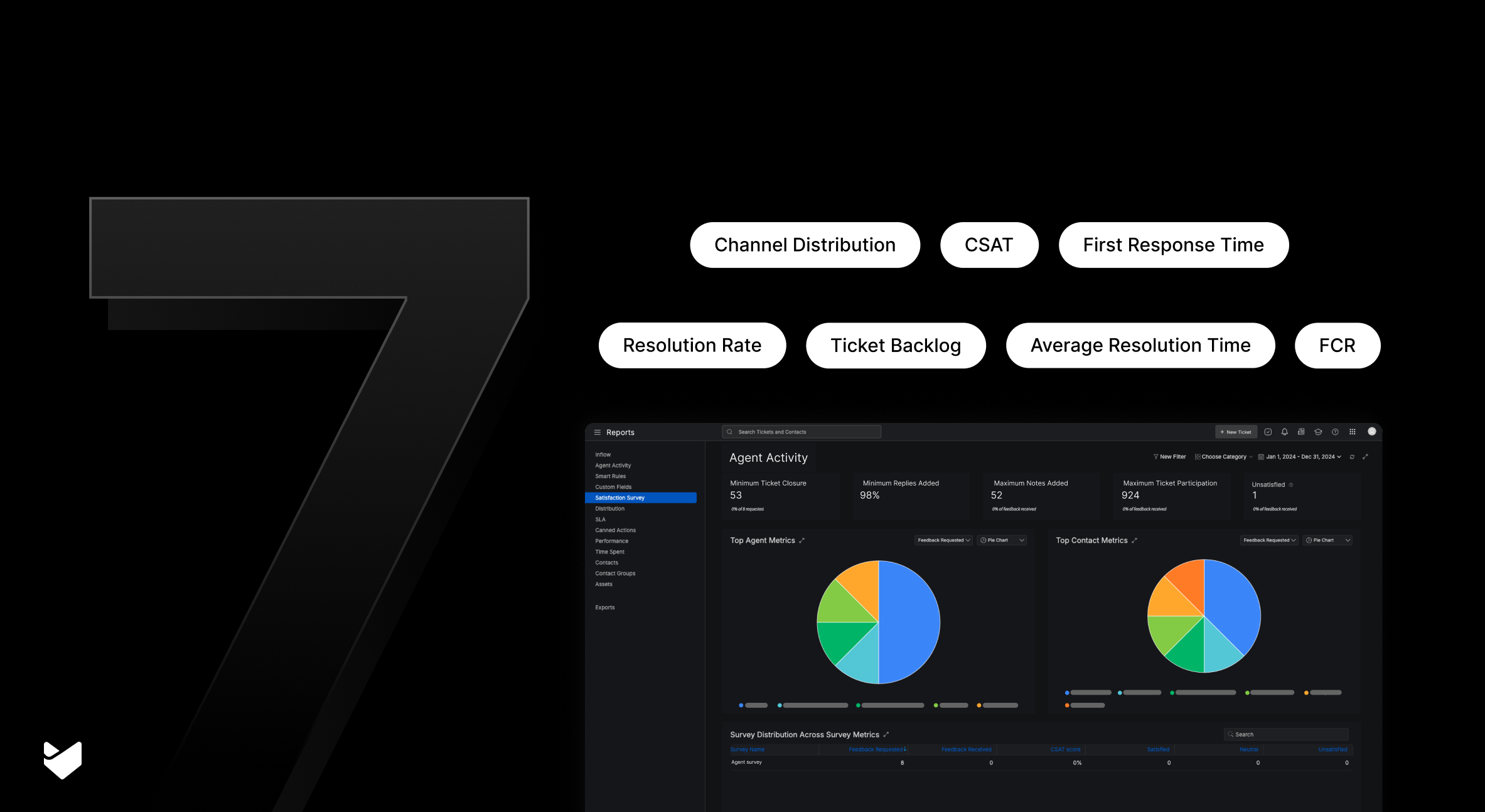
The 7 Essential Customer Experience Metrics
1. Customer Satisfaction Score (CSAT)
CSAT measures customer satisfaction with specific support interactions through post-interaction surveys. This metric directly reflects support quality and highlights areas for improvement.
How to Calculate:
– Collect ratings on a simple 3-point scale (Satisfied, Neutral, Unsatisfied)
– Calculate the percentage of “Satisfied” responses
– CSAT = (Number of “Satisfied” responses / Total number of survey responses) x 100
Pro Tip:
Don’t just track overall CSAT. Break it down by support channel, ticket type, and agent to identify specific improvement opportunities.
2. First Response Time (FRT)
First Response Time measures how quickly your team provides the initial response to customer inquiries. Fast response times show customers you value their time and concerns.
Implementation Checklist:
– Set up automated response time tracking
– Define acceptable FRT ranges for different ticket priorities
– Create alerts for response time breaches
– Monitor trends across different time periods
3. Average Resolution Time
This metric tracks the complete lifecycle of a support interaction – from first contact to final resolution. It’s a crucial indicator of your team’s efficiency and process effectiveness.
Feature Spotlight: Resolution Time Analysis
– Track time from ticket creation to closure
– Identify bottlenecks in the resolution process
– Monitor resolution patterns by ticket type
– Set and track resolution time goals
Learn more: Customer service vs customer experience
4. First Contact Resolution Rate (FCR)
FCR measures the percentage of issues resolved in a single interaction. High FCR rates typically correlate with higher customer satisfaction and lower support costs.
How to Improve FCR:
– Empower agents with comprehensive knowledge resources
– Implement intelligent ticket routing
– Provide thorough agent training
– Use automation for common issues
5. Ticket Backlog
Your ticket backlog indicates pending support requests and overall workload. Managing this metric effectively is crucial for maintaining customer satisfaction and team morale.
Pro Tip:
Analyze your backlog patterns to identify peak periods and staff accordingly. This proactive approach helps maintain consistent service levels.
6. Resolution Rate
Resolution rate shows the percentage of tickets resolved compared to total tickets received. It’s a key indicator of your team’s productivity and efficiency.
Calculation Example:
If you receive 100 tickets and resolve 80:
Resolution Rate = (80/100) x 100 = 80%
7. Channel Distribution
Understanding how customers prefer to reach you helps optimize resource allocation and improve overall support efficiency.
Common Support Channels:
– Email support
– Live chat
– Phone support
– Social media
Best Practices for Implementing Experience Metrics
1. Set SMART Goals
Establish specific, measurable, achievable, relevant, and time-bound objectives for each metric. For example:
– Set target percentage of “Satisfied” ratings for each quarter
– Define maximum resolution times by ticket priority
– Establish minimum FCR rate goals
2. Regular Review and Analysis
Don’t just collect data – analyze it regularly to identify:
– Trends and patterns
– Areas for improvement
– Success stories to replicate
– Resource allocation needs
3. Agent Training and Empowerment
– Share metrics transparently with your team
– Provide coaching based on metric insights
– Celebrate improvements and achievements
– Use metrics for constructive feedback
How HappyFox Elevates Your Customer Experience Metrics
HappyFox’s comprehensive analytics suite helps you track and improve all these crucial metrics:
1. Real-time Dashboard:
– Instant visibility into key performance indicators
– Customizable views for different roles
– Trend analysis and forecasting
2. Automated Tracking:
– Accurate measurement of response and resolution times
– Automatic SLA monitoring
– Channel distribution analytics
3. Custom Reports:
– Detailed analysis of all key metrics
– Scheduled report delivery
– Export capabilities for further analysis
Taking Action on Your Metrics
1. Assess your current metrics tracking capabilities
2. Identify gaps in your measurement approach
3. Set clear goals for each key metric
4. Implement regular review cycles
5. Use insights to drive continuous improvement
Ready to transform your customer experience metrics from basic numbers into actionable insights? Discover how HappyFox can help you measure, track, and improve your customer experience metrics.