A critical security vulnerability has just been discovered in your enterprise software. Thirty Fortune 500 clients need immediate patches and guidance. Your support team must coordinate with multiple IT departments, manage urgent deployments, and prevent potential data breaches – all while your biggest client is losing $50,000 every hour until resolution.
This is B2B customer service – where every ticket can impact thousands of users and millions in revenue. Your team’s response in the next few hours could make or break a million-dollar contract.
What is B2B Customer Service?
B2B customer service (also called B2B customer support) refers to the specialized assistance provided by one business to another after a sale or during the use of products/services. It focuses on helping client organizations resolve issues, optimize usage, maintain operations, and strengthen long-term partnerships.
Unlike general customer service, B2B support handles high-stakes, technical, and relationship-driven interactions where downtime or errors can cost clients significant revenue, productivity, or compliance risks. Common scenarios include troubleshooting enterprise software bugs, guiding API integrations, managing SLAs for uptime, coordinating multi-department escalations, and providing strategic advice to reduce churn in SaaS or hardware environments.
Effective B2B customer service builds trust, drives retention, uncovers upsell opportunities, and directly influences contract renewals and account expansion.
B2B vs B2C Customer Service: Key Differences
B2B Customer Service Best Practices
4. Offer Flexible Multi-Channel Support
How to Build a B2B Customer Service Strategy (Step-by-Step)
Step 3: Design Your Support Tiers and Escalation Paths
Build a clear tiered structure to handle complexity efficiently and ensure the right expertise reaches issues quickly.
- Tier 1: Initial triage, basic troubleshooting, and quick wins (generalists handle 60–70% of tickets).
- Tier 2: Technical specialists for deeper diagnostics, integrations, and configuration issues.
- Tier 3: Engineering/product team involvement for bugs, custom features, or root-cause fixes.
- Executive Escalation Path: For mission-critical situations (e.g., security incidents or major outages) with direct access to leadership.
Pro Tip: Document escalation criteria clearly and automate routing based on priority, impact, and account value to prevent bottlenecks.
Learn more: Design the perfect 4-tier model for your enterprise
Step 4: Establish Robust SLA Management
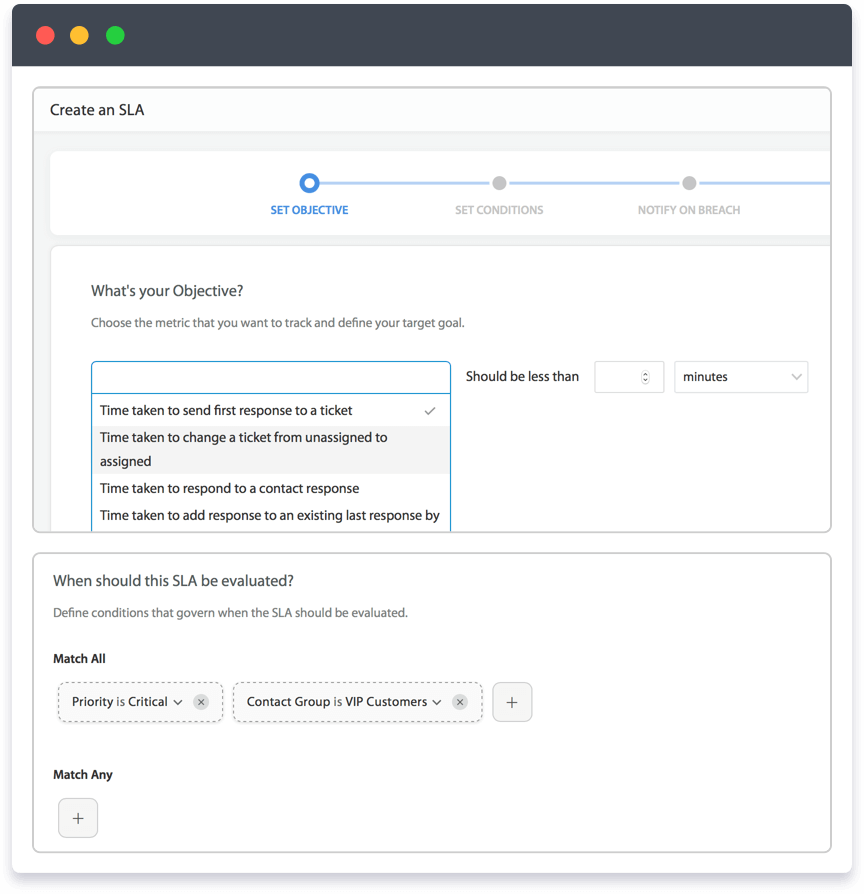
Modern B2B support infrastructure relies on strict, enforceable Service Level Agreements (SLAs) to set expectations and build trust.
Implement:
- Automated SLA tracking and countdown timers.
- Priority-based routing (e.g., P1 critical issues routed instantly).
- Real-time alerts for breaching deadlines.
- Comprehensive SLA reporting and breach analysis.
Tailor SLAs by customer tier or contract e.g., 99.9% uptime guarantees for enterprise clients or faster response for high-value accounts. This transparency reduces disputes and reinforces partnership.
Step 5: Build and Organize a Scalable Knowledge Base
Empower self-service to reduce ticket volume and speed resolutions. Structure your knowledge base for different user levels:
- Basic troubleshooting guides and FAQs for end-users.
- Advanced technical documentation and configuration guides.
- API references and developer resources.
- Implementation/onboarding playbooks.
- Industry-specific best practices and compliance docs.
Make it searchable, version-controlled, and integrated with your ticketing system. Regularly update based on ticket patterns and feedback aim for 40%+ deflection rate.
Learn more: Ultimate guide on how to create a knowledge base
Step 6: Select Tools and Integrate Infrastructure
Choose a unified platform (like HappyFox) that supports:
- Multi-channel intake (email, phone, chat, portals).
- AI-powered automation, ticket routing, and analytics.
- Custom workflows, SLAs, and knowledge base integration.
- CRM/ERP connectivity for full account context.
Ensure security (SSO, encryption, audit logs) and scalability for growing ticket volumes.
Step 7: Launch, Train, and Iterate
Roll out the strategy with team training on processes, tools, and SLAs. Start with a pilot group of accounts, gather feedback, and refine. Monitor KPIs monthly adjust tiers, SLAs, or knowledge gaps as needed.
Key takeaway: Building a B2B customer service strategy is iterative. Focus on proactive, personalized support that anticipates needs and scales with your business. This approach not only resolves issues but strengthens relationships, drives renewals and expansion, and positions support as a competitive advantage.
Want a platform that matches your B2B support strategy instead of fighting it? See how HappyFox handles SLAs, support tiers, AI automation, proactive workflows, and enterprise-grade security all in one place.
Schedule a Demo
Key B2B Customer Service Metrics and KPIs
How HappyFox Supports Modern B2B Customer Service

2. Enterprise-Grade Ticket Management