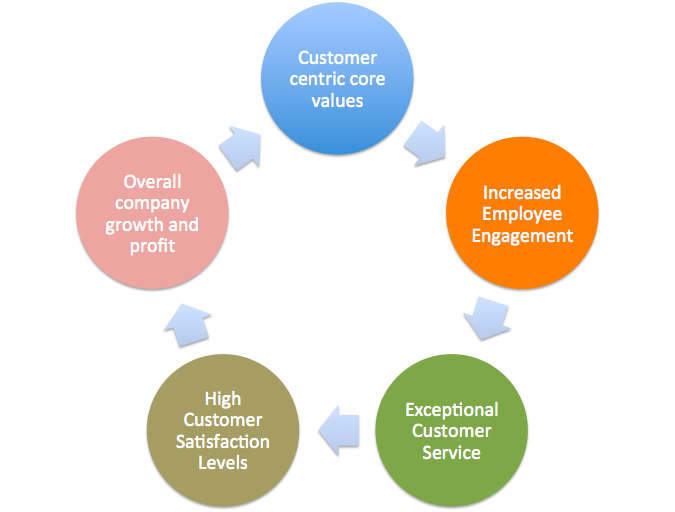
Picture this: Your support team just wrapped up a challenging quarter. Ticket volumes were through the roof, but something feels off. Despite the hard work, customer churn is creeping up. Sound familiar? You’re not alone. Many businesses pour resources into acquiring new customers but overlook a goldmine right under their noses: customer retention.
Let’s explore why customer retention matters, especially in the world of customer support, and how it can transform your business.
What is Customer Retention? Why does it Matter?
Customer retention refers to the process of keeping existing customers engaged and loyal to your business over time. It should be your top priority because it’s more cost-effective than acquiring new customers, significantly boosts profits, creates brand advocates, provides valuable feedback for improvement, and offers a competitive edge in crowded markets.
Here’s a deeper look at why customer retention is crucial:
1. Cost-Effective: It costs 5-25 times more to acquire a new customer than to retain an existing one.
2. Brand Advocates: Satisfied, long-term customers become brand ambassadors, bringing in new business through word-of-mouth.
3. Valuable Feedback: Long-term customers provide insights that help improve your products or services.
4. Competitive Edge: In crowded markets, exceptional customer support can be your secret weapon for retention.
Why Do Customers Leave a Company?
Understanding churn starts with understanding why it happens. Most businesses assume price is the primary reason customers leave. The data tells a different story.
Poor Customer Service Experience
This is the leading driver of churn across industries. A customer who contacts support and receives a slow, unhelpful, or inconsistent response is not just frustrated with the interaction. They begin to question the value of the relationship. One bad experience can outweigh months of positive ones. The support team is where retention is won or lost most often.
Unresolved Issues and Repeated Problems
Customers tolerate one failure if it is handled well. What they do not tolerate is contacting support repeatedly for the same issue. When a problem keeps coming back, the customer stops believing it will ever be fixed.
- Repeat contacts on the same issue are one of the clearest churn signals in any support environment
- Closing tickets before the underlying problem is solved is worse than leaving them open it creates the impression of resolution without the reality
Feeling Undervalued
Customers who feel like a number rather than a relationship are significantly more likely to leave the moment a competitor offers them attention. This shows up in transactional communications that never acknowledge history, loyalty that goes unrewarded, and personalization that is absent entirely. The message customers receive is that their continued business is assumed rather than earned.
Better Offer from a Competitor
Price and features do matter. But customers who feel well-supported and genuinely valued are far less likely to switch even when a competitor undercuts on price.
The offer is often the reason given for leaving, not the actual cause. The actual cause is usually an accumulated set of experiences that made the customer open to looking elsewhere. A competitor’s pitch only lands when the door is already open.
Poor Onboarding and Failure to See Value
For SaaS and service businesses especially, customers who do not reach their first meaningful outcome quickly are at high churn risk. A weak onboarding experience leaves customers uncertain about how to use the product, unsure whether it is solving their problem, and more likely to disengage before the relationship has had a chance to develop. Early churn is almost always an onboarding failure.
Key Customer Retention Metrics Every Support Team Should Track
To improve customer retention, you need to measure it. Here are the critical metrics to monitor:
Customer Retention Rate (CRR)
CRR measures the percentage of customers you keep over a defined period. It is the most direct indicator of whether your retention efforts are working. Track it monthly and quarterly, and segment it by customer type, product, or support tier to identify where churn is concentrated.
Formula
CRR = ((Customers at End of Period – New Customers Acquired) / Customers at Start of Period) x 100
Customer Lifetime Value (CLV)
- Tells you the total revenue a customer generates across the full relationship
- Puts retention into financial terms a high CLV customer is worth protecting with significant investment
- Helps prioritize which customers to focus retention efforts on when resources are limited
Formula
CLV = Average Purchase Value x Purchase Frequency x Average Customer Lifespan
Customer Satisfaction Score (CSAT)
CSAT captures how satisfied customers are with a specific interaction, typically a support ticket or service touchpoint. It is the fastest feedback signal your team has. Low CSAT scores on specific issue types or agents are early indicators of churn risk before it shows up in renewal or purchase data.
Formula
CSAT = (Number of Positive Responses / Total Responses) x 100
First Response Time (FRT)
FRT measures how quickly your team first acknowledges a contact. Speed matters disproportionately here: even when full resolution takes time, a fast acknowledgment signals the issue is being taken seriously. Slow first responses are one of the most consistent predictors of poor CSAT.
Formula
FRT = Total First Response Time Across All Tickets / Total Number of Tickets
Resolution Time
Resolution time measures how long it takes to fully close a customer issue from the moment it is opened. Faster resolution correlates with higher satisfaction, but resolution time should be read alongside CSAT and repeat contact rate. A low resolution time with poor CSAT often means issues are being closed before they are actually solved.
Formula
Avg. Resolution Time = Total Resolution Time Across All Tickets / Total Number of Tickets
Churn Rate
Churn rate is the inverse of CRR: the percentage of customers lost in a given period.
Track it alongside CRR rather than in isolation. A 92% retention rate and an 8% churn rate tell the same story, but seeing both numbers side by side makes the loss concrete. Segment by cohort, product, or support tier to identify which customer groups are leaving and why.
Formula
Churn Rate = (Customers Lost During Period / Customers at Start of Period) x 100
Understanding these metrics gives you a holistic view of your retention efforts and customer satisfaction levels.
Strategies for Boosting Customer Retention through Support
Improving customer retention through support involves personalizing experiences, streamlining onboarding, implementing proactive support, enhancing self-service options, optimizing multi-channel support, and continually gathering and acting on feedback.
Let’s explore these strategies in detail:
1. Personalize the Customer Experience
Personalization in a support context means treating each interaction as part of an ongoing relationship rather than a standalone transaction. Customers who feel recognized and understood are significantly more likely to stay. The baseline is having full customer history visible to every agent, so no one has to repeat themselves. Beyond that, personalization extends to proactive outreach, tailored recommendations, and communication that reflects what the customer has already told you.
- Surface customer history, previous tickets, and account context in the agent’s view before they respond
- Segment customers by behavior, CLV, or lifecycle stage and tailor communication accordingly
- Acknowledge milestones: renewal anniversaries, usage milestones, and long-term customer status
2. Streamline the Customer Onboarding Process
Customers who reach their first meaningful outcome quickly are significantly less likely to churn in the first ninety days. A strong onboarding process removes friction, sets clear expectations about what success looks like, and ensures customers know how to use the product before they run into a problem that makes them question their decision.
Onboarding is not a one-time event. It is a series of touchpoints that help customers move from activation to habit. The support team plays a critical role here: proactive check-ins in the first weeks, easy access to resources, and fast resolution of early issues all signal to new customers that they made the right choice.
3. Implement Proactive Customer Support
Reactive support waits for customers to report problems. Proactive support identifies issues before the customer has to. Teams that shift from reactive to proactive consistently see higher CSAT, fewer escalations, and better retention. The data to do this already exists in most support environments.
- Monitor usage patterns and alert customers when behavior suggests they are not getting value from the product
- Notify customers of known issues, maintenance windows, or service disruptions before they contact you about them
- Reach out to customers who have been quiet for an unusual amount of time — disengagement often precedes cancellation
4. Enhance Self-Service Options
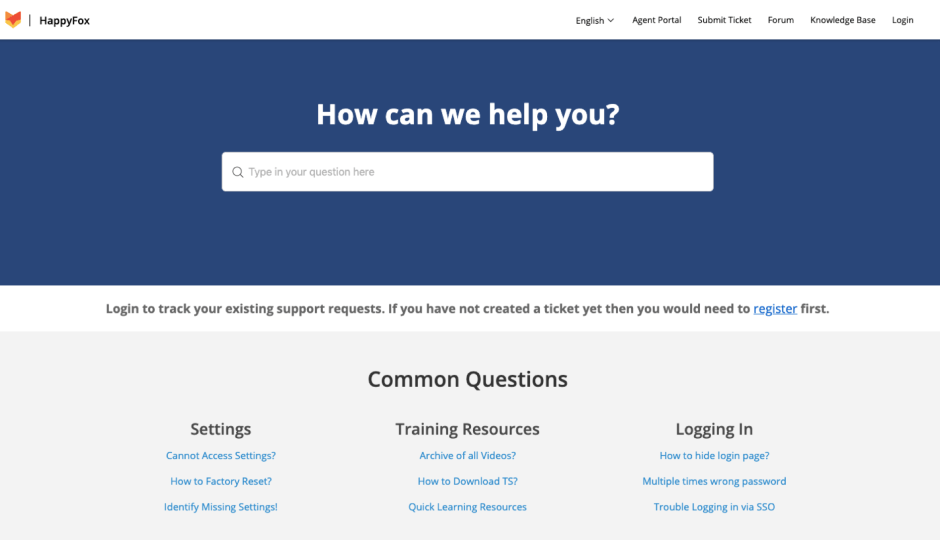
A well-built knowledge base reduces ticket volume and improves customer confidence at the same time. Customers who can find answers quickly without waiting for an agent have a better experience than those who have to open a ticket for every question. Self-service also gives customers a sense of control over their own relationship with the product. The support team’s role in self-service is ongoing: identifying the questions that keep coming up, turning them into knowledge base articles, and reviewing what people search for but cannot find. A knowledge base that is current and comprehensive is one of the highest-leverage retention tools a support team can maintain.
5. Optimize Multi-Channel Support
Customers contact support from wherever they are: email, live chat, phone, social media, and in-product messaging. A multi-channel support strategy ensures they get a consistent experience regardless of channel. The risk of multi-channel support done poorly is that customer history lives in silos. An agent answering a chat does not see the email from last week. The customer has to start over every time.
The goal is omnichannel support, where a unified view of the customer is available to every agent on every channel. Context follows the customer rather than staying locked in a single channel. Teams that achieve this consistently outperform on first contact resolution and customer satisfaction, because agents have the information they need to resolve issues without asking customers to repeat themselves.
6. Gather and Act on Customer Feedback
Collecting feedback is straightforward. Acting on it consistently is what most organizations struggle to do. Customers who give feedback and see no change stop giving feedback. Worse, they stop trusting that their input matters.
A retention-focused feedback process closes the loop explicitly: CSAT surveys after support interactions, NPS surveys to identify promoters and detractors, and a practice of sharing feedback themes with product and operations teams so support signals drive systemic improvements rather than just individual ticket fixes. The follow-through is what makes the difference.
7. Build a Loyalty Program
Loyalty programs are the most consistently cited retention strategy in current research. The principle is to reward customers for staying and for increasing their engagement. The programs that work best go beyond discounts. Tiered rewards give higher-value customers priority support, exclusive features, or dedicated account management. Points or credits tied to product usage, renewals, or referrals give customers a tangible reason to stay active. Experiential rewards such as early feature access, advisory board invitations, or exclusive events create a sense of belonging that cannot be replicated by a competitor offering a lower price.
8. Build Community and Engagement
Customers who are connected to a community around your product are significantly harder to lose than those who use it in isolation. Community creates a switching cost that has nothing to do with price or features: relationships, shared knowledge, and a sense of belonging that cannot be replicated by a competitor. User forums, customer groups, online communities, and in-person events all build the kind of connection that turns customers into advocates.
The support team plays a specific role in community: responding to questions in public forums, flagging recurring issues that the community surfaces, and recognizing community members who help other customers. A community where customers help each other also reduces inbound support volume, which compounds the retention benefit.
9. Leverage Social Proof and Customer Success Stories
Social proof reinforces the decisions your existing customers have already made. A customer who sees a case study from a company like theirs, solving a problem like theirs, is more confident they are in the right place. That confidence reduces openness to competitive alternatives.
Share relevant case studies with customers at similar lifecycle stages. Feature success stories in onboarding and renewal communications. Encourage reviews on third-party platforms where your customers research alternatives. Each of these touchpoints does the same thing: it tells a current customer that others in their position chose well and stayed.
10. Incentivize Referrals
A customer who refers someone is telling you two things at once: they are satisfied enough with the product to recommend it, and they are invested enough in its success to advocate for it. Referral programs turn that advocacy into a structured retention mechanism. Customers who bring in referrals have a higher emotional stake in the product and consistently show lower churn rates than those who do not. The incentive does not need to be large. Account credits, extended features, or priority support access are all effective. What matters is that the program makes it easy to refer and makes the customer feel their advocacy is recognized.
The Future of Customer Retention in Support
As we look ahead, several trends are shaping the future of customer retention:
1. AI-Driven Personalization: Expect even more tailored support experiences based on data analytics.
2. Proactive Support: Identifying and resolving issues before customers even realize they exist.
3. Emotional Intelligence in Support: Training and tools to help support agents build stronger emotional connections with customers.
4. Hyper-Personalized Customer Service: Support tailored to individual preferences, history, and behavior.
5. Integration of Support Across the Customer Journey: Seamless support experiences from pre-sale to post-purchase.
Empowering Customer Retention with Modern Help Desk Solutions
As businesses recognize the critical role of customer retention, many are turning to advanced help desk solutions to streamline their support processes and enhance customer experiences. One such solution making waves in the industry is HappyFox.
HappyFox offers a comprehensive suite of tools designed to support customer retention strategies:
– Omnichannel Support: Manage customer interactions across multiple channels (email, chat, phone) from a single, unified platform, ensuring consistent and context-aware support.
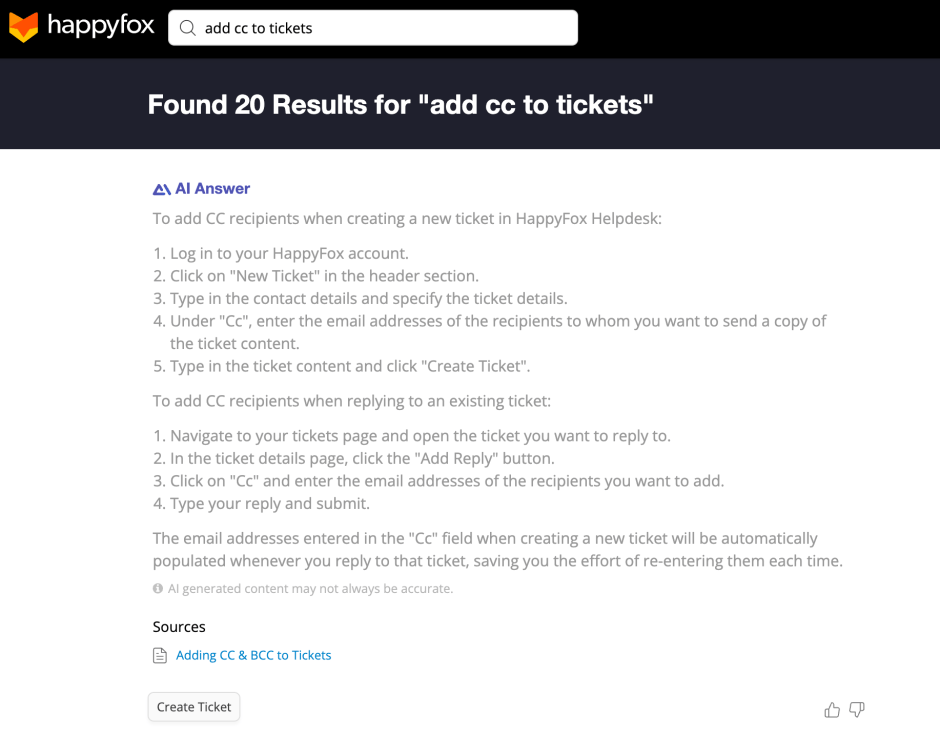
– Knowledge Base: Create and maintain a robust self-service portal, empowering customers to find answers quickly and reducing the load on your support team.
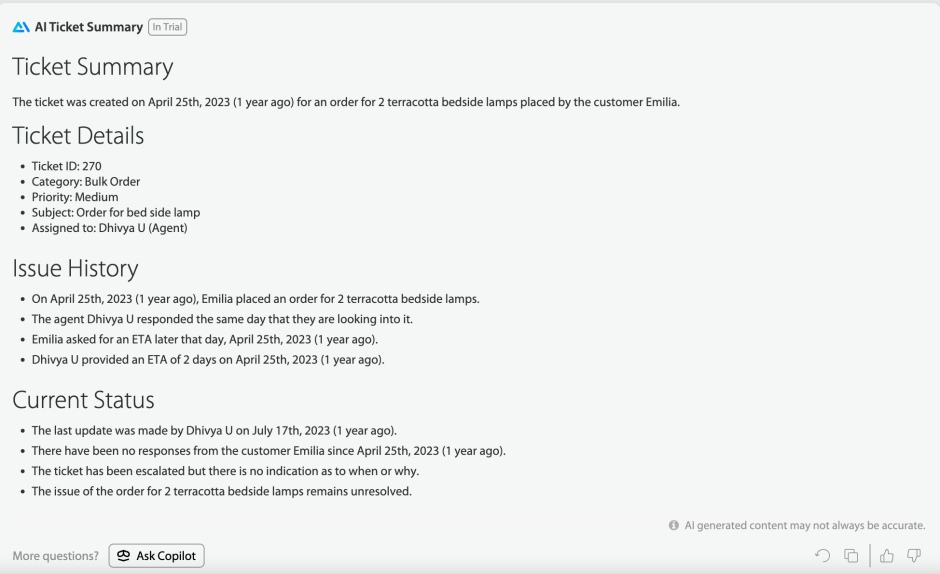
– AI-Powered Assistance: Leverage AI to provide instant, personalized responses to customer queries, improving response times and customer satisfaction.
– Smart Automation: Set up rules to automatically categorize, prioritize, and route tickets, ensuring efficient handling of support requests.
– Customer Feedback Collection: Easily gather and analyze customer feedback through integrated satisfaction surveys, helping you continuously improve your support processes.
– Advanced Reporting: Access detailed insights into your support performance, helping you identify trends, track key metrics, and make data-driven decisions to enhance customer retention.
By integrating such advanced features into your support strategy, you can create a more efficient, personalized, and satisfying experience for your customers – key ingredients for long-term retention and loyalty.
Your Path to Customer Retention Success
Remember, customer retention isn’t just about keeping customers; it’s about creating support experiences so valuable that customers wouldn’t dream of leaving. By focusing on personalization, proactive support, and continuous improvement, you can turn customer retention from a challenge into your competitive advantage.
Every support interaction is an opportunity to strengthen your relationship with your customers. Start small, measure your progress, and continuously refine your approach. With the right strategies and tools, you’ll not only retain customers but turn them into passionate advocates for your brand.
Ready to take your customer retention to the next level? Explore how modern help desk solutions like HappyFox can empower your team to deliver exceptional support that keeps customers coming back. Your journey to outstanding customer retention starts here.
Frequently Asked Questions
What is the most effective customer retention strategy?
Proactive support and personalization consistently rank highest because they address the root causes of churn before customers decide to leave. Loyalty programs are the most commonly cited tool by sales leaders for long-term retention. In practice, the most effective strategy is the one that addresses the specific reason your customers are leaving, which is why measuring churn by cohort and root cause matters before choosing a strategy.
Why is customer retention more profitable than customer acquisition?
Acquiring a new customer costs five to twenty-five times more than keeping an existing one. Existing customers also buy more frequently, spend more over time, and refer others at a higher rate than new customers. A 5% improvement in retention can increase profits by 25 to 95%, because the revenue comes with almost none of the acquisition cost.
How does customer support affect retention?
- Poor support is the leading reported reason customers leave, ahead of price and competitor offers
- Fast first response signals that the customer’s issue is being taken seriously, even before it is resolved
- Repeat contacts on the same issue are one of the strongest churn predictors in support data
The support team is where retention is won or lost most often. Teams that track FRT, resolution time, and CSAT and act on the data consistently outperform on retention over time.
How do you reduce customer churn?
Start by understanding where and why churn is happening. Segment churned customers by cohort, product, and support history to find the pattern. Most churn traces back to poor onboarding, unresolved recurring issues, or customers who never reached a meaningful outcome with the product. Fix the root cause rather than deploying broad retention campaigns that reach the wrong customers with the wrong message at the wrong time.
What are examples of customer retention strategies?
Proactive support outreach to at-risk customers, a tiered loyalty program that rewards long-term subscribers, a self-service knowledge base that helps customers find answers without waiting for an agent, personalized onboarding sequences based on customer goals, and community forums where customers help each other and build relationships with the product. Each of these addresses a different reason customers leave and works best when chosen based on where your specific churn is concentrated.