Ever wondered how much value your customer service team actually generates? Or better yet, how to prove it to stakeholders? Measuring Customer Service ROI isn’t just about crunching numbers – it’s about understanding the full impact of your support operations on business success. In this guide, we’ll break down the essential steps for calculating customer service ROI, share proven strategies for improvement, and show you how modern help desk solutions can help you track and boost your returns.
What is ROI in Customer Service?
ROI in customer service measures the financial returns generated by your support investments compared to their costs. It accounts for direct revenue impacts (like customer retention and upsells), cost savings through efficient operations, and long-term value from improved customer relationships, helping businesses quantify their support team’s contribution to the bottom line.
Why Measuring Customer Service ROI Matters
Imagine you’re in a budget meeting, and someone asks, “Why are we spending so much on customer service?” Without concrete numbers, defending your team’s value becomes an uphill battle. That’s where measuring customer service ROI comes in.
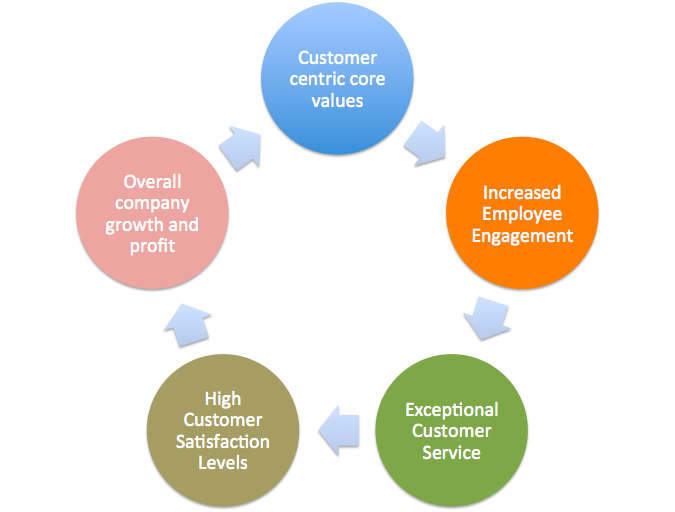
According to Forrester Research, companies that excel at customer experience drive revenue 5.7 times faster than their competitors. This isn’t just coincidence – it’s the result of strategic investments in customer service operations that deliver measurable returns.
When you can demonstrate your team’s impact through data, you shift the conversation from “How much does support cost?” to “How much value does support generate?” Let’s explore how to make this shift.
Key Metrics That Drive Customer Service ROI
Understanding your ROI starts with tracking the right metrics. These metrics act as the vital signs of your support operations, offering insights into the efficiency and impact of your investments.
1. Cost per Ticket
The cost per ticket is your foundational metric. Much like the cost per acquisition in marketing, this number helps you evaluate operational efficiency. However, the lowest cost isn’t always the goal. Sometimes, a higher cost per ticket reflects better problem resolution and enhanced customer satisfaction.
2. Customer Retention Value
Customer retention value highlights how well your support team retains and nurtures your existing customers. According to Bain & Company, increasing customer retention by just 5% can boost profits by 25% to 95%. By turning frustrated customers into loyal advocates, your team directly contributes to long-term profitability.
3. Customer Satisfaction Score (CSAT)
CSAT scores measure how satisfied customers are with your support interactions. High CSAT scores often correlate with higher customer loyalty and advocacy, which translates to greater lifetime value.
4. Resolution Time
Faster resolution times improve customer satisfaction and reduce operational costs. Tracking and optimizing this metric can significantly enhance your overall ROI.
How to Calculate Customer Service ROI
Calculating customer service ROI requires a structured approach. Follow these steps to quantify the impact of your support team and turn qualitative insights into actionable numbers:
Step 1: Map Your Investments
Identify all costs associated with your customer service operations. Include:
- Salaries and benefits for support staff
- Technology and software expenses (e.g., help desk subscriptions)
- Training and development programs
- Overheads like office space and utilities
Be as comprehensive as possible to get an accurate baseline.
Step 2: Quantify Revenue Impact
Customer service directly influences revenue through:
- Customer Retention: Calculate the revenue retained from customers who were saved from churning.
- Upselling Opportunities: Measure additional revenue generated through successful upsells.
- Customer Referrals: Factor in revenue from new customers referred by satisfied clients.
If a customer service agent prevents a $1,000 subscription cancellation, that’s $1,000 in preserved revenue.
Step 3: Evaluate Operational Efficiency
Efficient support operations reduce costs while maintaining quality. For instance:
- Automating ticket routing can save time and labor costs.
- Self-service portals deflect routine inquiries, freeing up agents for complex issues.
Analyze cost savings from automation and streamlined workflows to gauge their impact on ROI.
Step 4: Integrate Customer Lifetime Value (CLV)
Customer interactions influence future purchases, loyalty, and advocacy. To integrate CLV:
- Track post-interaction purchase behavior.
- Assess the impact of customer support on brand advocacy.
- Measure referral rates and their financial contribution.
Step 5: Calculate ROI
Use this formula to determine your ROI:
ROI = ((Revenue Impact + Cost Savings + CLV Impact – Total Investment) / Total Investment) × 100
For example, if your total investment is $100,000, and the combined impact of revenue, cost savings, and CLV is $350,000, your ROI is 250%.
Step 6: Analyze Results and Iterate
Once you calculate ROI, identify areas for improvement. If ROI is below expectations, focus on enhancing efficiency, improving agent training, or leveraging advanced tools.
Transforming Support from Cost Center to Profit Driver
This is where HappyFox truly shines. Our platform isn’t just about handling tickets – it’s about transforming your entire approach to customer service ROI.
Imagine having a dashboard that shows you, in real-time, how your support operations are impacting the bottom line. That’s exactly what our Performance Report provides. You can track resolution times, monitor satisfaction scores, and measure the impact of your automation efforts, all in one place.
But here’s the real game-changer: our Smart Rules and automation capabilities. These aren’t just convenience features – they’re ROI boosters. Every automated response, every streamlined workflow, and every self-service interaction reduces costs while maintaining or improving service quality.
Pro Tip
Use HappyFox’s custom dashboards to create ROI-focused views that highlight the metrics that matter most to your stakeholders.
Making Data-Driven Support Decisions
With HappyFox’s comprehensive analytics suite, you’re not just collecting data – you’re gaining insights that drive decisions. Our platform helps you:
- Identify peak support hours to optimize staffing
- Track which types of issues are most costly to resolve
- Measure the effectiveness of your knowledge base in deflecting tickets
- Calculate the ROI of your automation initiatives
How HappyFox Helps Improve Your Customer Service ROI
Let’s talk about turning these insights into action. At HappyFox, we’ve spent years helping companies maximize their support ROI through our comprehensive help desk solution. Here’s how our platform helps you boost returns on your customer service investment.
Automation That Pays for Itself
Our Smart Rules is more than just a time-saver – it’s a cost reducer. When you automate ticket routing, assignments, and escalations, you’re not just making life easier for your agents. You’re significantly cutting down the cost per ticket while maintaining quality.
Our customers are able to slash response times by 60% using automated ticket assignments and canned responses. Their agents now focus on complex issues that truly need human attention, maximizing the value of their time.
Knowledge Base: Your 24/7 Support Agent
Think of a knowledge base as an investment that keeps giving returns. Our drag-and-drop knowledge base builder helps you create a self-service portal that:
- Deflects repetitive tickets
- Empowers customers to find answers instantly
- Reduces support costs without sacrificing quality
The best part? With HappyFox AI, you can automatically transform common support tickets into knowledge base articles, continuously improving your self-service capabilities.
Smart Ticket Management for Better Resource Allocation
Our ticketing system doesn’t just organize support requests – it optimizes how you handle them. Through features like:
- Custom ticket queues for priority management
- Automated ticket assignment based on agent expertise
- Real-time collision detection to prevent duplicate efforts
You’re not just managing tickets; you’re maximizing the return on every minute of agent time.
Data-Driven Decision Making
What sets HappyFox apart is our approach to analytics. Our comprehensive reporting suite helps you:
- Track exact cost savings from automation
- Monitor agent productivity and identify training needs
- Quantify the success of self-service initiatives
Omnichannel Support Without the Overhead
By centralizing all your support channels – email, phone, chat, social media – in one platform, you eliminate the overhead of managing multiple systems. This integration doesn’t just save money; it creates a consistent customer experience that builds loyalty.
CSAT Surveys That Drive Improvements
Our built-in satisfaction surveys do more than collect feedback. They help you:
- Identify trends in customer satisfaction
- Spot opportunities for service improvements
- Track the ROI of specific service initiatives
- Measure agent performance impact on customer loyalty
Conclusion: The Future of Customer Service ROI
As we move forward, measuring customer service ROI will only become more crucial. The good news? It’s also becoming easier with the right tools. HappyFox’s integrated approach to support analytics means you’re always just a few clicks away from demonstrating your team’s value.
Remember, customer service isn’t a cost center – it’s an investment in your company’s future. By effectively measuring and optimizing your ROI, you transform support from a necessary expense into a strategic advantage.
Ready to revolutionize how you measure and improve your customer service ROI? Book a demo and Let’s talk about how HappyFox can help you make it happen.