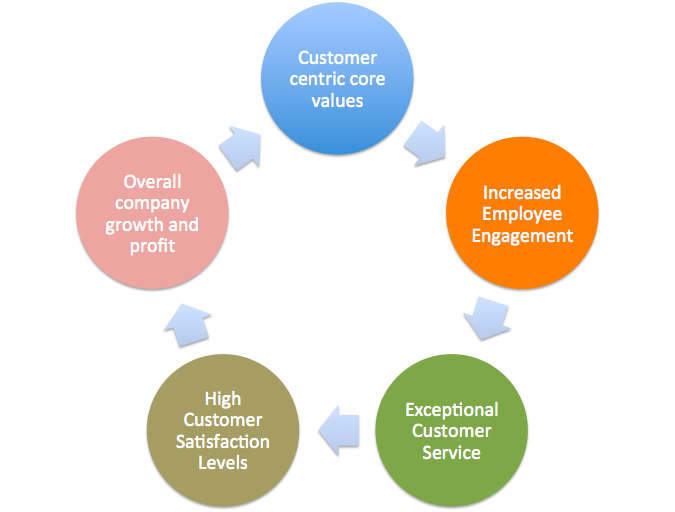
Every time a customer contacts your team, something is happening beyond the ticket being resolved. They are forming an opinion. About how easy it was to reach you. How long they waited. Whether the agent actually understood the problem. Whether the resolution felt like genuine help or just a checkbox being ticked.
That opinion is their customer service experience. It accumulates across every interaction they have had with your business, and it shapes whether they come back, recommend you to others, or quietly move to a competitor after the next frustrating exchange. For support leads and team managers, understanding what customer service experience actually is, and what drives it up or down, is the foundation for everything else you do.
TL;DR
Customer service experience is the sum of how customers feel after every interaction with your support team. It is shaped by speed, consistency, empathy, and ease of resolution. Positive experiences drive loyalty, referrals, and revenue. Negative ones drive churn, complaints, and lost trust. Building it well means getting the right processes, the right team behaviors, and the right feedback loops in place.
What is Customer Service Experience?
Customer service experience is the overall impression a customer forms based on every interaction they have with your support function. Not just the outcome of a ticket, but how the whole thing felt: how fast they got a response, whether they had to repeat themselves, how the agent communicated, whether the resolution actually held.
Customer Service Experience vs. Customer Experience: What’s the Difference?
These two terms get conflated constantly, and it matters to keep them separate because they require different owners, different strategies, and different metrics.
Customer experience is the full picture: every touchpoint a customer has with your brand from the moment they discover you to long after they buy. It includes how your website feels to navigate, how your pricing is communicated, how your product performs, and yes, how your support team handles problems.
Customer service experience is specifically what happens in the support function. It is the narrow, deep slice of the customer relationship that your team manages directly. Every ticket, every conversation, every self-service interaction, every escalation.
- Why it matters to keep them separate: when customer experience and customer service experience are treated as the same thing, accountability gets muddy. A customer who had a poor experience because the product was broken often blames support even when support did everything right. Knowing the difference helps you measure what your team actually controls, report on it accurately, and improve it with focus rather than trying to fix problems that sit outside your scope.
Why Positive Customer Service Experience Matters
Support teams often have to make the case internally for investment. Here is what is actually at stake.
It Determines Whether Customers Stay
A customer who has a problem handled well is often more loyal than one who never had a problem at all. Being taken care of when something goes wrong creates trust in a way a frictionless relationship never quite does. The inverse is just as true: customers who have a bad experience do not always complain. Most of them just quietly leave, and you find out when the renewal does not come through.
It Generates Word of Mouth, Both Ways
Customers who have a genuinely good experience tell people. Customers who have a bad one tell more people, and increasingly they tell them publicly.
- A single negative review on a high-traffic platform can reach more potential customers than months of good word-of-mouth.
- A support team that consistently delivers good experiences is generating quiet but compounding positive reputation.
- A team that consistently frustrates customers is often doing brand damage leadership does not see until it is already significant.
It Feeds Directly Into Revenue
Customers who feel well served spend more, renew more, and are more open to expanding their relationship with your business. The commercial link is direct: good support experience increases lifetime value, reduces churn, and lowers the cost of acquisition because you are not replacing customers who left. When making a budget case for support investment, the revenue argument is one of the strongest available.
It Reflects on the Entire Brand
For most customers, support is the most frequent human contact they have with your business after the initial sale. In those moments, support is the brand. A product can be excellent and marketing can be polished, but if the support interaction is slow, dismissive, or frustrating, that is what sticks. Support team behavior is company behavior in the moments that matter most to the customer.
Essential Elements of a Positive Customer Service Experience
If you are trying to understand what actually drives good scores, these are the factors that matter most to customers consistently across industries.
Speed of Response
The first signal a customer receives about how much the business values their time is how quickly it responds. A long wait before the first reply sets a negative tone before a single word of resolution is spoken. This is not about rushing through interactions. It is about having the capacity, routing, and tooling to acknowledge requests quickly and give customers a realistic sense of when they will hear back. An honest four-hour window is better than silence.
First Contact Resolution
Customers do not want to call back. They do not want to escalate. They want the problem fixed the first time they contact you, and every time they have to make a second contact about the same issue the experience score drops, regardless of how well the second interaction goes.
First contact resolution is a direct reflection of whether agents have the knowledge, authority, and tools to actually solve problems rather than just log them. When FCR is low, the underlying causes are almost always one of three things: agents lack access to information, agents lack authority to act, or the routing means the wrong people are handling certain request types.
Empathy and Human Communication
A technically correct response delivered in a cold, scripted tone leaves customers feeling unheard. Acknowledging the frustration before diving into the fix is not a soft skill extra. It changes the emotional tone of the entire interaction. Customers who feel genuinely understood are more forgiving of delays, more patient with complex resolutions, and more likely to rate the experience positively even when the outcome is not what they hoped for.
Consistency Across Channels and Agents
Consistency is what turns individual good interactions into a reliable expectation. A customer who gets excellent service by email and cold responses on live chat has not had a consistent experience. Neither has one who gets a different answer from a different agent about the same issue. This requires documented processes, a shared knowledge base, and training that aligns agent behavior across the team regardless of channel.
- Same quality of help whether the customer contacts by email, phone, chat, or social media.
- Same answer from any agent on the same question, every time.
- Same tone and process whether the customer reaches a senior or junior team member.
Ease of Getting Help
If customers cannot find the contact option, have to navigate a confusing phone menu, or are pushed through unnecessary verification steps before an agent picks up, the experience is already damaged before the conversation begins. Friction in the access process is one of the most overlooked drivers of poor experience scores because support teams rarely experience their own contact process from the customer’s side. A quarterly audit of how hard it actually is to reach your team is one of the most useful exercises a support manager can run.
Follow-Through and Closure
An issue that gets resolved but never confirmed leaves the customer uncertain whether it was actually fixed. An escalation that disappears without explanation creates anxiety. Closing the loop explicitly, confirming resolution, explaining what was done, telling the customer how to reach out if the issue returns, is a small behavior with a disproportionate impact on how the whole interaction is remembered.
What is the Business Impact of Customer Service Experience?
For support managers making a case for investment, these are the clearest lines between customer service experience quality and business outcomes.
Customer Retention
Customers who consistently feel well served stay longer, are less likely to evaluate competitors, and are more forgiving when something goes wrong because they have a history of being taken care of. Poor experiences accumulating over time is one of the strongest predictors of churn, even when the product itself is performing well. The problem is that most customers do not announce they are leaving. They just stop renewing. By the time churn data shows a trend, the experience problems that caused it have often been building for months.
Customer Lifetime Value
Retention and lifetime value are connected but different. Retention is whether a customer stays. Lifetime value is how much they are worth over time. Customers who trust a business spend more, expand usage, and respond better to upsell and cross-sell conversations.
- A customer retained for three years instead of one is worth substantially more in revenue, even if the product price is the same.
- Customers who feel valued are more likely to try new products or features when offered.
- Support teams that resolve issues well are directly contributing to the commercial relationship, not just maintaining it.
Brand Reputation and Reviews
Online reviews, NPS scores, and word-of-mouth recommendations are all downstream of experience. A business with a consistent track record of good support builds a reputation that attracts new customers and reassures prospects. That reputation is largely invisible until it is not, which is when a pattern of bad reviews starts showing up in the places your sales team’s prospects look before buying. The support function is often where brand reputation is quietly built or quietly destroyed.
Team Performance and Agent Retention
The link between agent experience and customer experience runs both ways. Agents who have clear processes, the right tools, and genuine authority to resolve issues find the work more meaningful and burn out less quickly. High turnover in support teams is expensive in direct cost and in experience quality: every time an experienced agent leaves, the institutional knowledge they carried leaves with them, and the customers they interact with before their replacement gets up to speed absorb the impact. Investing in agent development is not a people-management nicety. It is a customer experience decision.
Strategies to Build a Positive Customer Service Experience
Map the Customer Journey from the Outside In
Most support managers understand their team’s process from the inside. What they often miss is how that process feels from the customer’s side. Walk through the experience yourself: find the contact option on your own website, submit a test ticket, track what the acknowledgment says, notice what information you have to provide before reaching an agent. This exercise almost always surfaces friction that is invisible from inside the operation but immediately obvious from the customer’s perspective. Fix the friction first, before optimizing anything else.
Build a Knowledge Base That Actually Gets Used
Most knowledge bases underperform not because they exist, but because they are poorly maintained and written in language that does not match how customers describe problems. A useful knowledge base requires active management.
- Check monthly which searches return no results and create articles to fill those gaps.
- Write in the language customers use, not the language the product team uses.
- Assign clear ownership for keeping articles current after product or process changes.
A well-maintained knowledge base deflects a meaningful portion of inbound tickets every month and reduces the time agents spend on issues that have already been solved before.
Set Response Time Expectations and Keep Them
A customer who knows they will hear back within four hours experiences the wait very differently from one who has no idea when anyone will respond. Set public SLAs where appropriate, make sure acknowledgment messages state a realistic timeframe, and then meet those commitments consistently. Uncertainty about response time is one of the most common drivers of follow-up contacts, which increase your team’s workload and the customer’s frustration simultaneously.
Train Agents on Empathy, Not Just Process
Most support training covers product knowledge and escalation workflows. Both matter. But the agents who consistently score highest on CSAT are the ones who acknowledge how frustrating the situation is before jumping to the fix, who adapt their tone to the customer’s emotional state, and who make the conversation feel like a conversation rather than a checklist. These behaviors are teachable through call reviews, role-play exercises, and structured feedback on real tickets. They do not require personality changes. They require practice and a manager who reinforces them consistently.
Close the Feedback Loop at Two Levels
Collecting CSAT scores without acting on them is theater. The feedback loop has to close twice: at the agent level, where individual negative feedback is reviewed and discussed, and at the team level, where patterns across scores inform process changes, training decisions, and tooling improvements. Most teams do neither consistently. The ones that do find that the same handful of issues drive the majority of poor scores, and fixing those specific problems moves the average more reliably than broad training initiatives.
Give Agents the Authority to Actually Resolve Things
Build a support structure where agents cannot do much without escalating and customers will sense it immediately. Being told ‘I need to check with my manager’ or ‘I cannot take action myself’ communicates one thing: this team is not empowered to help you. Clear resolution authority, documented guidelines for common scenarios, and access to the systems agents need to act independently does more for first contact resolution rates than almost any other operational change. Empowerment is a customer experience decision as much as a management one.
How to Measure Customer Service Experience
You cannot improve what you are not tracking. These are the four metrics support teams use most to understand experience quality over time.
Customer Satisfaction Score (CSAT)
CSAT is collected through a post-interaction survey, usually a simple rating scale sent immediately after a ticket closes. It gives you a real-time read on individual interactions and lets you track trends across agents, channels, and issue types. The limitation to know: CSAT measures satisfaction with a single touchpoint. A customer can give high scores on every individual ticket and still churn because the accumulated experience, the pattern of having to contact support repeatedly, of never quite getting a complete resolution, was not good enough overall.
Net Promoter Score (NPS)
NPS asks one question: how likely are you to recommend this company to someone you know? Unlike CSAT, it captures overall sentiment about the relationship rather than a specific interaction. Responses divide customers into Promoters, Passives, and Detractors. The score is the difference between the percentage of Promoters and Detractors.
- Use NPS as a periodic health check on the customer base, not a ticket-level quality metric.
- A declining NPS trend is often an early churn signal that interaction-level CSAT scores would not catch.
First Contact Resolution Rate (FCR)
FCR is the percentage of issues resolved in a single interaction without the customer needing to follow up. It is one of the most operationally honest metrics in support because it captures agent capability, process effectiveness, and knowledge quality in a single number. Low FCR is almost always traceable to one of three causes: agents lack information, agents lack authority to act, or the wrong people are handling certain request types. Fixing those underlying causes improves the experience more reliably than anything else.
Customer Effort Score (CES)
CES measures how easy it was for a customer to get their issue resolved. It is the metric most directly tied to process friction and one of the strongest predictors of loyalty. Customers who find it easy to get help stay and recommend. Customers who find it hard, who had to repeat themselves, navigate a clunky portal, or wait too long before reaching a human, leave and do not come back. CES surveys are usually sent immediately post-interaction and ask customers to rate the ease of the process, not just the outcome.
Common Mistakes That Damage Customer Service Experience
Optimizing for Ticket Closure Instead of Problem Resolution
When the primary metric is how many tickets were closed today, agent behavior naturally adapts to closing tickets rather than resolving problems. Customers feel this immediately. An interaction where the agent was clearly trying to get off the call rather than engage with the issue is not a good experience, regardless of whether the ticket was technically closed. The fix is straightforward: measure resolution quality alongside resolution speed, and make sure agents understand that a closed ticket that generates a follow-up contact is not a success.
Keeping Support Isolated from the Rest of the Business
Support teams collect more actionable feedback about products, processes, and friction points than almost any other function in the business. Most of that intelligence never reaches the people who could act on it.
- Product bugs reported repeatedly by customers that engineering does not know about because there is no feedback loop.
- Confusion around a feature that marketing copy is causing, visible in ticket language but never surfaced to the marketing team.
- Policy friction that sales promised exceptions to, generating support contacts that come from a mis-set expectation, not a broken product.
Building a regular channel from support insights to product, engineering, and success teams turns the support function into an organizational intelligence asset rather than a complaint handler.
Underinvesting in Agent Development
High-turnover support teams deliver worse customer experiences and cost more to run. Agents who are undertrained, given no development path, and not recognized for quality work burn out and leave faster. The customer service experience quality degrades before they go, not just after. Investing in training, clear career progression, and structured feedback is both a retention strategy and a direct investment in the quality of every customer interaction the team handles.
How HappyFox Enhances Customer Service Experience
HappyFox provides powerful tools to deliver exceptional customer service experiences:
Smart Ticketing System
– Unified omnichannel support management
– Intelligent ticket routing and prioritization
– Custom SLA monitoring and alerts
– Real-time collaboration tools

– Comprehensive interaction tracking
Knowledge Management
– Feature-rich knowledge base platform
– AI-powered content optimization
– Self-service portal customization
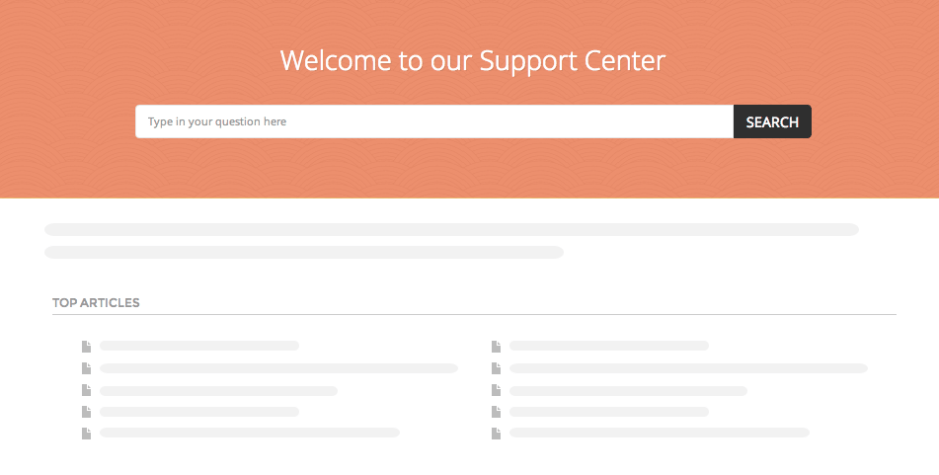
– Multi-brand knowledge bases
Automation Engine
– Custom workflow automation
– Smart queue management

– Automated response suggestions
– Proactive alert systems
– Time-based triggers
Analytics & Reporting
– Customer satisfaction tracking
– Service quality monitoring
– Performance analytics
– Response time tracking
– Custom reporting dashboards
Learn more: 12 Essential Reports for Enterprise Help Desk
AI-Powered Intelligence
– Smart ticket analysis
– Context-aware responses
– Self-service optimization
– Performance insights
– 24/7 automated support
Elevate Your Customer Service Experience
Creating exceptional customer service experiences isn’t just about having the right tools – it’s about using them effectively to deliver consistent, personalized support at scale. HappyFox’s platform provides everything you need to transform your customer service operations and create memorable experiences that drive loyalty and growth.
Ready to revolutionize your customer service experience?
Schedule a demo with HappyFox today and discover how our comprehensive solution can transform your support operations.
Frequently Asked Questions
1. What is customer service experience?
Customer service experience is how customers perceive and feel about interactions with a company’s support team. It reflects the quality, speed, empathy, and consistency of service provided across channels-ultimately shaping satisfaction, loyalty, and brand reputation.
2. How can businesses improve customer service experience?
Businesses can improve service experience by providing faster responses, training agents in empathy, and using unified help-desk software. Personalizing interactions, offering self-service options, and collecting regular feedback also enhance satisfaction and retention.
3. What are the key elements of a great customer service experience?
Essential elements include quick response times, clear communication, empathetic support, knowledgeable agents, and seamless omnichannel service. Together, these create a consistent, trustworthy, and efficient experience that meets customer expectations at every touchpoint.
4. How is customer service experience different from customer experience?
Customer service experience focuses on interactions with the support team, while customer experience covers every brand touchpoint-from marketing to product use. Great customer service experience strengthens the overall customer experience by resolving issues effectively and leaving a lasting positive impression.
5. What metrics measure customer service experience?
Key metrics include Customer Satisfaction (CSAT), First Response Time (FRT), and Average Resolution Time (ART). Tracking these KPIs helps businesses evaluate service quality and identify areas for continuous improvement.