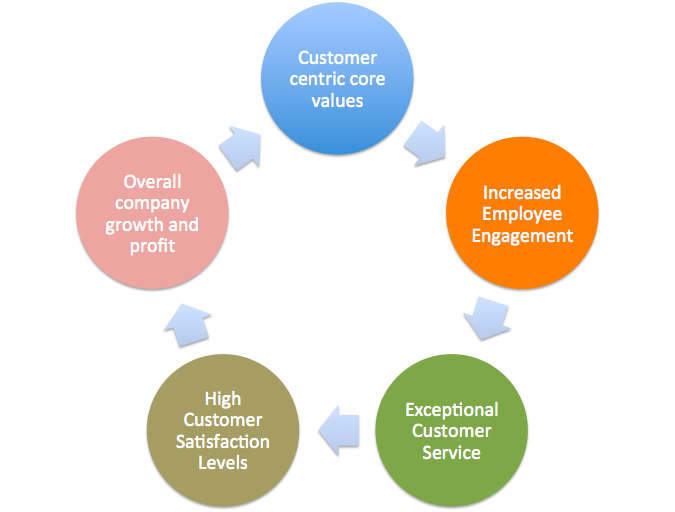
Acquiring a new customer costs five to seven times more than keeping one. Most businesses know this. Few actually build their operations around it.
Customer loyalty is not a by product of a good product or a decent support team. It is something you construct deliberately, through every interaction, every policy, every recovery from a mistake. The companies with genuinely loyal customer bases treat retention as a growth function, not a defensive one. They are not trying to prevent churn. They are building something customers actively choose to stay inside.
The difference shows up quickly. Loyal customers spend more, refer others, forgive mistakes faster, and cost far less to serve than new ones. But those outcomes are downstream effects. They do not happen because you launched a points program or sent a birthday email. They happen because your customers trust you, consistently, over time.
This guide breaks down what customer loyalty actually means, what drives it, how to measure it, and what separates brands that have it from brands that are always chasing the next acquisition to replace the customers they lost last quarter.
TL;DR
- Customer loyalty is a customer’s consistent choice to return to your brand over alternatives, even when competing options exist. It is built through trust across every interaction, not just a good product.
- Loyal customers cost less to serve, spend more over time, and refer others in. The financial, marketing, and operational benefits compound the longer they stay.
- Ten strategies build it: exceptional service, personalization, loyalty programs, consistent communication, product quality, value-added services, employee engagement, community, transparency, and data-driven decisions.
- Not all loyal customers are alike. Habitual, incentivized, satisfied, and emotional loyalists each need a different approach. Emotional loyalists are your most valuable and the hardest to earn.
- Measure loyalty with NPS, retention rate, CLV, churn rate, and customer reviews. It develops across six stages from Awareness to Advocacy, and customers can be lost at any one of them.
What is Customer Loyalty?
Customer loyalty is the tendency of a customer to repeatedly choose a specific brand, product, or service over available alternatives, even when competing options exist. It goes beyond repeat purchases. A loyal customer stays during price increases, defends the brand in public, and brings others in through referrals.
Loyalty is not the same as habit. A customer who keeps using your product because switching is inconvenient is not loyal. They are trapped. Real loyalty is a choice. The moment a better option appears, a habit breaks. Loyalty holds. It also is not the same as satisfaction. A satisfied customer had a good experience. A loyal customer keeps coming back because the relationship has built enough trust and value that your brand becomes their default. Satisfaction is the entry point. Loyalty is what you build on top of it.
Why Is Customer Loyalty Important?
The short answer: loyal customers are the most profitable customers you have, and the most expensive ones to replace once they leave.
Customer acquisition is resource-intensive. Paid media, sales cycles, onboarding, early support: all of it costs money and time before a new customer generates a single dollar of return. A loyal customer has already cleared that hurdle. Every subsequent purchase from them runs at dramatically lower cost and higher margin.
Beyond the economics, loyalty creates compounding advantages that acquisition spending cannot buy. A customer who trusts your brand talks about it. That word-of-mouth reaches audiences your advertising cannot, and it carries credibility no campaign can replicate. One loyal advocate in a tight professional community is worth more than a thousand impressions on a paid placement.
There is also a resilience dimension most businesses discover too late. Brands with deep customer loyalty weather product failures, PR problems, and price increases in ways that brands without it cannot. Loyal customers give you the benefit of the doubt. Transactional customers move on the moment something better appears. When a crisis hits, loyalty is the difference between a recoverable problem and a permanent customer exodus.
Benefits of Customer Loyalty
The benefits of customer loyalty show up across three dimensions of your business: financial, marketing, and operational. Most companies only track the financial side. The other two compound just as powerfully.
Financial Benefits
1. Increased Revenue
Loyal customers spend more per transaction, buy more frequently, and are far less sensitive to price changes than new customers. Their lifetime value substantially exceeds that of one-time or low-frequency buyers.
- Higher customer lifetime value: a customer who stays for years and purchases regularly generates multiples of the revenue a single-purchase customer does, at a fraction of the ongoing cost.
- More frequent purchases: trust eliminates the re-evaluation cycle. Loyal customers do not shop around on every buying decision. They default to you.
- Greater willingness to try new products: your existing loyal base is your most receptive audience at any launch. They already trust the source.
- Less price sensitivity: customers who are invested in a relationship weigh price increases differently than transactional buyers do.
2. Reduced Costs
Retention campaigns cost substantially less than acquisition campaigns. Loyal customers who refer others reduce your blended customer acquisition cost across the portfolio.
- Lower marketing expenses: you spend less convincing someone who already trusts you than converting someone who has never heard of you.
- Decreased customer acquisition costs: referrals from loyal customers arrive pre-qualified and lower your cost per acquired lead.
- More efficient service delivery: familiar customers need less hand-holding, reducing support time and cost per interaction.
- Predictable sales patterns: stable purchase frequency simplifies forecasting, inventory planning, and cash flow management.
Marketing Benefits
1. Brand Advocacy
Loyal customers are your most credible marketing channel. Word-of-mouth referrals arrive pre-qualified and pre-warmed. The referred prospect already has a reason to trust you before they have spoken to anyone on your team.
- Free word-of-mouth marketing: organic referrals from satisfied long-term customers carry more weight than any paid campaign.
- Authentic testimonials: a two-year customer review is more credible than a polished case study your marketing team wrote.
- Social media promotion: loyal customers share experiences publicly without being asked or incentivized.
- Positive online reviews: sustained loyalty translates into the kind of review volume and sentiment that influences buying decisions at scale.
2. Market Intelligence
Loyal customers are your best source of honest, specific feedback. They tell you what is actually breaking, what they wish existed, and where competitors are gaining ground.
- Valuable customer feedback: long-term customers give context-rich input that survey responses from general audiences rarely match.
- Product improvement insights: loyal users identify friction points earlier and articulate them more precisely than occasional users.
- Market trend indicators: engaged customers signal emerging needs before those needs show up in market research.
- Competitive intelligence: loyal customers will tell you when a competitor is getting their attention. Listen carefully when they do.
Operational Benefits
1. Better Planning
A stable customer base makes your entire operation more predictable. Predictable demand reduces waste and enables smarter resource allocation.
- More predictable demand: loyal customer purchase patterns are easier to forecast than the behavior of a constantly rotating new-customer cohort.
- Easier inventory management: predictability reduces both overstocking and stockout risk.
- Stable cash flow: recurring revenue from loyal customers smooths the peaks that make financial planning difficult.
- Strategic growth opportunities: when your base is secure, you can invest in expansion rather than spending all your energy on churn recovery.
2. Service Efficiency
Loyal customers are easier and cheaper to serve because you already know them. HappyFox structures this context inside the helpdesk so agents can see full customer history before they type a single word.
- Familiar with customer preferences: past interaction data lets agents personalize responses without starting every ticket from scratch.
- Streamlined processes: repeat customers know your system, reducing the time spent on orientation and basic guidance.
- Lower support costs: experienced users raise fewer elementary queries and resolve more issues independently.
- Faster problem resolution: agents with history context reach the root cause faster and resolve tickets with fewer back-and-forth exchanges.
10 Proven Strategies to Build Customer Loyalty
There is no single lever that builds loyalty. It is the accumulation of consistent decisions across every touchpoint that either compounds trust or erodes it. These ten strategies are where that work gets done.
1. Exceptional Customer Service
Support is where loyalty is won or lost most visibly. A customer who contacts you with a problem and walks away impressed is more loyal than one who never had to reach out at all. Speed matters. Empathy matters. But resolution matters most: solving the problem completely, on first contact, is the single highest-leverage action a support team can take.
HappyFox gives support teams the structure to deliver on all three. Tickets are routed intelligently, SLAs keep response times accountable, and the full customer history is visible in one place so agents are never starting blind.
| Pro Tip: Track first-contact resolution rate by customer segment. Loyal, high-value customers should be hitting above 80%. If they are not, your support routing or knowledge base has a gap that is costing you retention. Fix the segment that matters most first, then work outward. |
2. Personalization
Customers notice when you remember them and notice even more when you do not. Personalization is not about using someone’s first name in a subject line. It is about demonstrating that you know who they are, what they have bought, what problems they have had, and what they are likely to need next. A recommendation that reflects actual purchase history is personalization. A generic upsell blast sent to your entire list is noise.
Celebrate customer milestones: anniversaries, significant purchase thresholds, long tenure. These moments cost almost nothing to acknowledge and signal that the relationship has value beyond the transaction.
3. Loyalty Programs
A well-designed loyalty program gives customers a structural reason to return. Point systems work when the reward is genuinely attainable and redemption is frictionless. Tiered rewards create aspiration: customers who are one tier away from a meaningful benefit will actively increase their purchase frequency to get there.
The common mistake: designing a program that rewards spend but ignores engagement. A customer who buys frequently but never refers and never reviews is less loyal than one who spends less but actively advocates. Structure your program to reward both behaviors.
4. Consistent Communication
Staying in contact without being intrusive is harder than it sounds. The goal is to be present at moments that matter without clogging inboxes with noise. Regular newsletters work when they carry genuine value: useful content, product updates that affect workflows, behind-the-scenes context that makes customers feel like insiders. The moment communication becomes purely promotional, engagement drops and unsubscribe rates climb.
5. Quality Products and Services
This is the foundation everything else rests on. No loyalty program, personalization engine, or community initiative survives a consistently poor product. Quality means maintaining high standards at every release, every service interaction, every delivery. It means listening to feedback closely enough to catch degradation before customers notice it publicly. It means fixing problems fast and communicating clearly when things go wrong.
6. Value-Added Services
Give customers more than they paid for and they remember it. Free training, educational content, access to expert advice, and complementary services create perceived value that competitors cannot easily replicate. They are not just competing with your product. They are competing with the entire ecosystem you have built around it. Exclusive events for long-term customers deepen the relationship in ways that digital interaction alone cannot.
7. Employee Engagement
Loyal customers are almost always the product of engaged employees. A support agent who is properly trained, genuinely empowered to solve problems, and recognized for doing good work delivers a fundamentally different experience than one who is burned out and working from a rigid script. Customers feel the difference, even through text on a screen. Investing in the people who interact with customers is investing directly in loyalty.
8. Community Building
A brand that customers belong to is harder to leave than one they simply buy from. Online forums, user groups, social media communities, and in-person events create a sense of shared identity around your product. When customers connect with each other over their shared use of your platform, they become invested in its success. They contribute feedback, help new users, and defend the brand publicly. That is loyalty at its most durable.
9. Transparency
Trust is built on honesty, including honesty about mistakes. Clear policies, straightforward pricing, and open communication during service disruptions signal respect for the customer’s intelligence. Brands that hide problems until they are unavoidable destroy trust faster than almost any product failure could. Admitting a mistake cleanly and fixing it quickly is more loyalty-building than pretending it never happened.
10. Data-Driven Decisions
Loyalty is measurable and the measurement tells you what to fix. Track NPS, CSAT, retention rate, repeat purchase frequency, and CLV. Analyze patterns across customer segments to understand which behaviors predict long-term retention and which ones predict churn. The brands that improve loyalty over time treat it as a discipline, not a feeling.
Different Types of Loyal Customer
Not all loyal customers are loyal for the same reason. Treating them as a uniform group leads to programs that over-invest in customers who would have stayed anyway and under-invest in those who are genuinely at risk.
Habitual Loyalists
These customers return because switching requires effort, not because they have strong feelings about your brand. A competitor with a smoother migration process can move them quickly. Do not mistake low churn from this segment for genuine loyalty. The moment friction is removed from switching, they are gone.
Incentivized Loyalists
They stay because of the loyalty program. Remove the points or the tier status and their attachment largely disappears. This segment is worth maintaining but should not be confused with your most valuable cohort. They are transactional buyers with a structured incentive.
Satisfied Loyalists
These customers genuinely like your product and service. They have no pressing reason to leave and moderate reasons to stay. They will not refer proactively, but they respond positively to well-timed engagement. The goal with this segment is to deepen the relationship until they move from satisfied to genuinely committed.
Emotional Loyalists
This is your most valuable segment. These customers have a genuine affinity for your brand that goes beyond product utility. They identify with what your company stands for, talk about you without being asked, and are your most resilient cohort when something goes wrong. You cannot manufacture them with a campaign. You earn them over years through consistent delivery and genuine care.
How to Measure Customer Loyalty
Loyalty is not one number. It is a constellation of signals that, taken together, tell you how secure your customer relationships actually are. Relying on a single metric is how companies get blindsided by churn they should have seen coming.
Net Promoter Score (NPS)
NPS asks one question: how likely are you to recommend us to a colleague or friend? Responses sort customers into Detractors (0-6), Passives (7-8), and Promoters (9-10). Your score is the percentage of Promoters minus the percentage of Detractors. A rising NPS over time is a reliable signal that your loyalty investment is working. A flat or declining NPS despite a good product often points to a support or communication failure.
Customer Satisfaction (CSAT) Score
CSAT measures satisfaction with a specific interaction. It is narrow by design. A high CSAT on individual tickets does not guarantee loyalty, but a pattern of low CSAT scores at scale is a strong leading indicator of churn. Use it at the interaction level to identify where your experience is breaking down before it shows up in retention data.
Customer Retention Rate
Retention rate measures the percentage of customers who remain active over a defined period. It is the most direct proxy for loyalty you have. Track it monthly and by cohort. Cohort-level retention tells you whether loyalty is improving for customers acquired recently or only for long-tenured ones, which are very different problems requiring very different solutions.
Repeat Purchase Rate
Repeat purchase rate tracks how many customers make more than one purchase within a defined window. For subscription businesses this maps to renewal rate. For eCommerce it tracks return buyer frequency. For service businesses it shows client rebooking patterns. Low repeat purchase rate in any category where repeat buying is expected is an early warning sign, often visible before it shows up in NPS or CSAT data.
Customer Lifetime Value (CLV)
CLV is the total revenue a customer is expected to generate across their relationship with your brand. It ties loyalty to financial outcome most directly. Track it alongside acquisition cost: the ratio of CLV to CAC tells you how efficiently your business is turning new customers into long-term value.
Customer Churn Rate
Churn rate is the percentage of customers who leave in a given period. Segment churn by cohort, channel, and product line to understand where the exits are happening and what they have in common. Aggregate churn masks the story. Segmented churn tells it.
Customer Reviews and Feedback
Qualitative data is as important as quantitative data and often more actionable. Review sentiment across platforms tells you how customers describe their experience in their own words. Patterns in feedback surface the issues that numbers alone cannot explain. Read the reviews. They are telling you exactly what to fix.
Stages of Customer Loyalty
Loyalty does not happen in a single interaction. It develops across a progression of stages, and customers can be lost at any one of them if the experience does not meet the expectation the previous stage created.
Stage 1: Awareness
The customer knows your brand exists. Nothing has been earned yet. Your job is to make a credible first impression that motivates a closer look. Consistency of message and clear articulation of what problem you solve are what move people forward.
Stage 2: Consideration
The customer is actively evaluating you against alternatives. Trust signals matter enormously here: case studies, authentic testimonials, transparent pricing, and responsive pre-sale support all influence whether a prospect becomes a first-time buyer.
Stage 3: First-Time Customer
The first purchase is a test. The customer is watching closely to see whether reality matches what was promised. Onboarding quality and the accessibility of support in those first days are disproportionately influential on whether a first-time buyer becomes a repeat one. A single poor experience at this stage has outsized impact because there is no reservoir of goodwill to absorb it.
Stage 4: Satisfaction
The customer has had enough positive experiences to form a positive overall impression. They are not actively looking for alternatives, but they have not built strong attachment either. This is your most convertible segment: a well-timed personalized offer, a milestone acknowledgment, or an impressive support interaction can move them decisively toward loyalty.
Stage 5: Loyalty
The customer now actively prefers your brand. They return without needing to be re-sold and are less sensitive to competitor offers. They have enough positive history to extend reasonable benefit of the doubt when something goes wrong. Your job at this stage is to maintain the quality that earned their loyalty and continue deepening the relationship.
Stage 6: Advocacy
The customer refers others, leaves positive reviews without being asked, and defends the brand in public conversations. They have moved from customer to asset. Advocacy is the outcome of sustained, exceptional experience over time. It cannot be manufactured with an incentive alone. When a customer reaches this stage, make it easy for them to advocate: referral programs with real value, shareable content, and community platforms where their voice can be heard.
Conclusion
Customer loyalty is not a program you launch. It is a reputation you build, one interaction at a time, over the entire lifespan of the customer relationship. The brands with genuinely loyal customer bases did not get there by accident. They made deliberate decisions at every stage of the customer journey to prioritize trust over short-term extraction.
Start with the stage your customers are actually at, not the stage you wish they were in. Measure honestly. Fix what the data shows. Most customers do not leave because of the price. They leave because a problem did not get solved, a response took too long, or no one seemed to know who they were.
HappyFox fixes the underlying architecture: every ticket routed to the right person, every agent equipped with the customer’s full history, every SLA tracked so nothing slips through. When support works that well, customers notice and they stay.
Frequently Asked Questions
What is customer loyalty and how do you measure it?
Customer loyalty is a customer’s consistent preference for your brand over alternatives, built on trust accumulated over time. Measure it through NPS, retention rate, CLV, repeat purchase rate, and churn rate. Read reviews too. Numbers tell you what, reviews tell you why.
What are the strategies to increase customer loyalty?
Start with exceptional support and genuine personalization, these two move the needle faster than anything else. Layer in loyalty programs, consistent communication, and value-added services once the foundation is solid. Quality of product and quality of service are what everything else depends on.
What are the 4 C’s of customer loyalty?
Consistency, Communication, Care, and Community. Each one builds on the last: consistent experience earns trust, clear communication keeps it, genuine care deepens it, and community makes the brand part of the customer’s identity rather than just a vendor they use.
What are the 3 R’s of customer loyalty?
Retention, Referral, and Revenue. They compound together: retained customers refer, referred customers generate revenue, and that revenue funds the service quality that retains the next customer.
What are some examples of customer loyalty?
Apple customers who stay in the ecosystem through multiple upgrade cycles. Frequent flyers who reroute trips to protect their status. A restaurant regular who drives past four closer options for the same table every Friday. Loyalty shows up wherever a relationship consistently outweighs convenience.
What are the challenges of customer loyalty?
It takes time to earn and very little to lose. One poorly handled complaint, a price increase with no context, or a product failure met with silence can undo months of goodwill in a single interaction. Commodity markets make it harder still, where switching costs are low and the next alternative is always one search away.