“Sorry for the delayed response.” If your support team finds itself typing this message frequently, you’re not just apologizing – you’re losing opportunities to build customer trust and loyalty. In today’s digital landscape, customer responsiveness in modern support has become the defining factor between exceptional and mediocre service. Let’s explore what makes support teams truly responsive and how to build a support system that delights customers consistently.
What Is Customer Responsiveness in Modern Support?
Customer responsiveness in modern support means how quickly and how well your team acknowledges a customer, understands their need, and moves them toward a real outcome across every channel they use.
It is not just about replying fast. It is giving the customer confidence that you are on it, setting the right expectations, and following through with accurate help, clear updates, and a timely resolution.
Core Elements of Customer Responsiveness
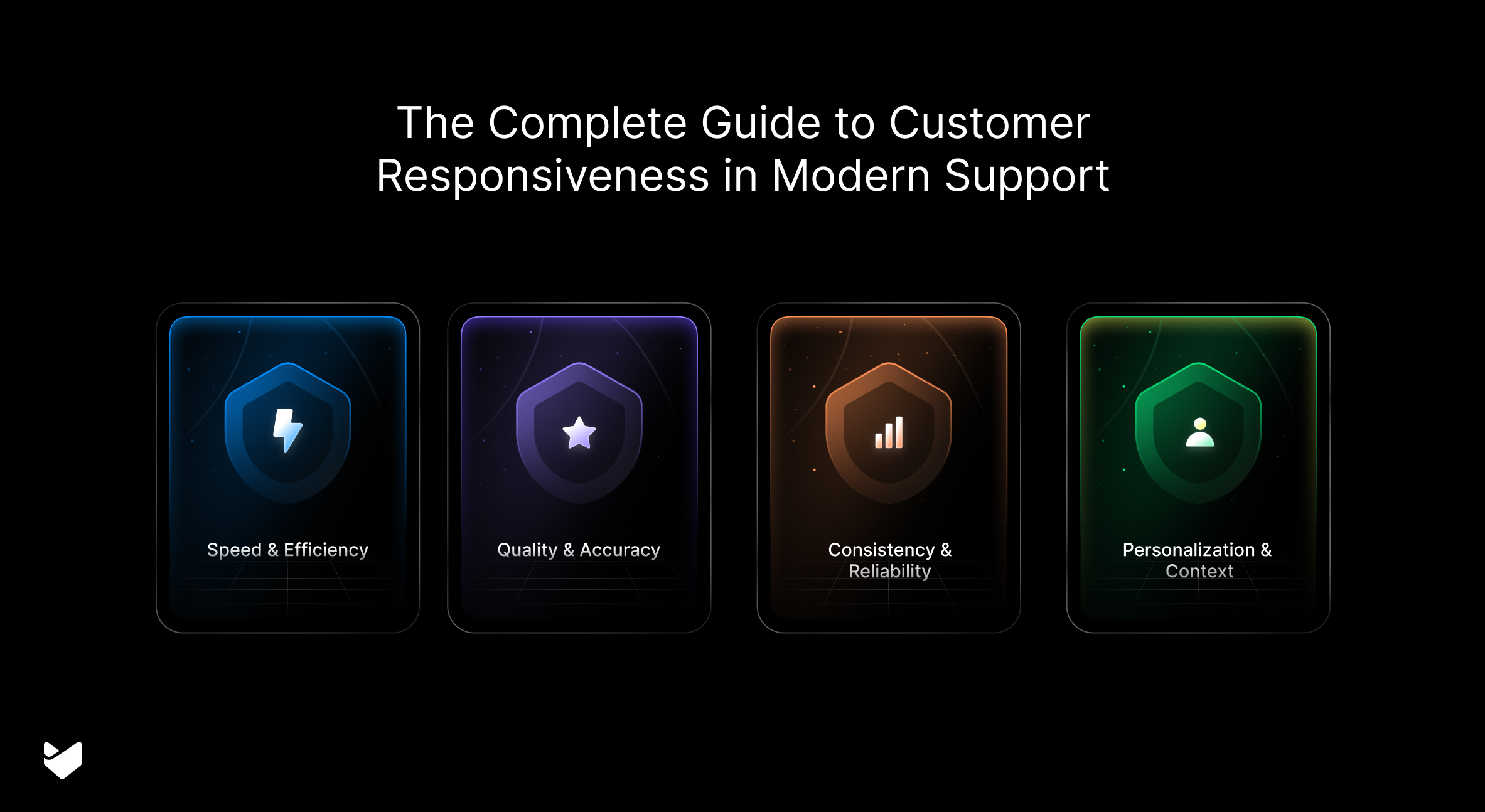
Speed and efficiency
Responsiveness starts with speed, but it has to be organized speed. The goal is quick acknowledgment, fast movement, and fewer handoffs that slow everything down.
- First response time optimization: Set up instant acknowledgment and routing so customers know their request is in progress. Use automation to assign tickets by channel, issue type, priority, and customer tier.
- Resolution time management: Build clear paths to resolution using playbooks, internal workflows, and escalation rules. Reduce back and forth by collecting the right details early.
- Workflow efficiency: Remove bottlenecks with standardized intake forms, smart categorization, and structured ticket fields. AI triage can help classify tickets, suggest next steps, and summarize long threads.
- Resource allocation: Balance workload with skills-based routing, time-zone coverage, and queue ownership. Use reporting to identify peak hours and staffing gaps.
- Omnichannel speed: Customers expect the same pace whether they email, chat, call, or message you on social. A unified inbox and shared queue prevent “slow channels” from becoming a backlog graveyard.
Quality and accuracy
Fast replies mean nothing if they are wrong or incomplete. Modern responsiveness is speed with correctness, clarity, and closure.
- Response accuracy: Make sure answers are correct and consistent with policy, product behavior, and past decisions. AI assisted replies work best when they are grounded in your knowledge base and approved sources.
- Solution completeness: Solve the whole problem, not just the first question. Include steps, expected outcomes, and what to do next if it fails.
- Follow-up effectiveness: Confirm resolution and prevent reopen loops by checking outcomes, not just closing tickets. Add a short verification step for high-impact issues.
- Quality assurance processes: Use ticket reviews, coaching, and macros that are updated based on recurring failures. Track reopens, escalations, and repeat contacts as quality signals.
- Knowledge integration: Link responses to internal documentation and external help articles. A strong knowledge base improves both agent accuracy and self-service deflection.
Consistency and reliability
Customers trust support teams that feel dependable. That comes from repeatable standards, predictable timelines, and smooth handoffs.
- Standard response frameworks: Use templates and guidelines that keep responses clear, on-brand, and compliant, while still allowing agents to sound human.
- Service level agreements: Set realistic commitments for first response and resolution, then enforce them with automation, reminders, and escalation rules.
- Team coordination: Build clean handoffs between L1, L2, and specialists. Shared notes, ticket history, and internal comments prevent customers from repeating themselves.
- Cross-channel consistency: The experience should match across email, chat, phone, and social. Unified ticket history is what makes this possible.
- Documentation and interaction history: Ensure every interaction is tracked automatically. Strong ticket history reduces repeat work and makes escalations faster and cleaner.
Accessibility and self-service
Responsiveness also means customers can get help without waiting for an agent. This is where modern support teams win back time.
- Self-service access: Maintain a searchable knowledge base, FAQs, and guided workflows for common issues.
- Deflection without frustration: Use help widgets, suggested articles, and in-product guidance that genuinely solves issues. Bad self-service increases tickets, it does not reduce them.
- Always-on assistance: Chatbots and AI assistants can handle quick questions, collect details, and route complex issues to the right team, especially after hours.
Proactive engagement and personalization
Modern responsiveness is not just reacting. It is anticipating needs, using context, and preventing issues before they become tickets.
- Customer history awareness: Use past tickets, account details, and plan tier to respond with context. This reduces time to resolution and improves CSAT.
- Contextual responses: Adjust troubleshooting depth and urgency based on customer segment, business impact, and the channel they chose.
- Personalized solutions: Recommend steps that fit the customer’s setup and constraints. Avoid generic replies when the account context clearly points to a better path.
- Proactive support: Share known-issue updates, status changes, and preventative guidance early. Proactive messaging cuts ticket volume and improves trust.
- Integrations that unlock context: Integrate with CRM and collaboration tools like Slack and Microsoft Teams so agents have customer context and internal support without switching tabs.
Impact on Business Success
Revenue Growth
– Increased customer retention
– Higher upgrade rates
– More referrals
– Expanded service adoption
Customer Experience Enhancement
– Stronger brand loyalty
– Improved satisfaction scores
– Reduced churn risk
– Enhanced brand advocacy
Learn more: 7 Customer Experience Best Practices 2024
Operational Excellence
– Improved team efficiency
– Reduced handling times
– Better resource utilization
– Lower operational costs
Implementation Guide
Phase 1: Assessment
– Current State Analysis
* Review response metrics
* Map customer journey points
* Evaluate team capabilities
* Assess tool effectiveness
Phase 2: Strategic Planning
– Goal Setting
* Define success metrics
* Set response time targets
* Create quality standards
* Plan resource allocation
Phase 3: Process Development
– Workflow Design
* Create standard procedures
* Build automation rules
* Develop response templates
* Establish review processes
Phase 4: Team Enablement
– Training and Support
* Conduct skill assessments
* Provide tool training
* Create reference materials
* Establish mentoring programs
Best Practices for Excellence
Process Optimization
Regular workflow reviews: Identify bottlenecks and streamline support operations for better efficiency
Quality monitoring systems: Track key metrics to maintain consistent service standards
Continuous improvement cycles: Turn customer feedback into actionable process improvements
Performance benchmarking: Measure team success against industry standards and internal goals
Knowledge Management
Content organization: Structure support content for quick access during customer interactions
Regular updates: Keep knowledge base current with product changes and emerging customer needs
Access optimization: Ensure agents can find relevant information quickly when handling tickets
Gap analysis: Identify and fill missing documentation based on customer inquiries
Team Development
Ongoing training: Keep agents updated with latest product knowledge and support techniques
Skill enhancement: Help agents develop expertise in handling complex support scenarios
Performance coaching: Provide regular feedback and guidance for continuous improvement
Knowledge sharing: Enable team members to learn from each other’s experiences and best practices
Transforming Support with HappyFox
HappyFox provides a comprehensive solution designed specifically for modern customer responsiveness needs. Our platform helps support teams deliver exceptional service through:
Smart Ticket Management
Automatic categorization and routing: Instantly classifies incoming tickets based on content and sends them to the right team members, eliminating manual sorting
Round-robin assignment: Distributes incoming tickets sequentially to available agents in rotation
Smart rule assignment: Creates custom rules to set priorities, assign specific tickets to designated agents, and automate ticket routing based on business requirements
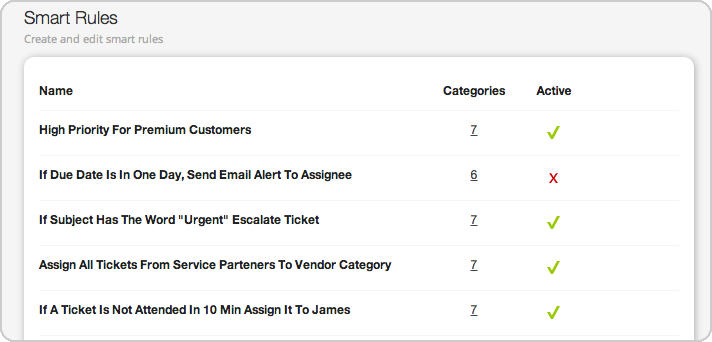
SLA monitoring: Tracks response and resolution times against service commitments with email notifications for breached SLAs
Customer context integration: Provides agents with complete customer history and relevant details directly within tickets for more personalized support
Workflow Automation
Custom rule creation: Builds automated workflows that match your specific support processes and requirements
Process automation: Eliminates repetitive tasks by automating routine ticket management activities
Follow-up management: Automatically sends status updates and follow-up messages to keep customers informed

Task coordination: Streamlines handoffs between teams and ensures proper ticket escalation
Performance Analytics
Response time tracking: Measures how quickly teams handle different types of customer inquiries
Team metrics: Monitors individual and team performance against key support objectives
Satisfaction monitoring: Tracks customer feedback and identifies trends in service quality
Resource optimization: Analyzes support patterns to help optimize team scheduling and capacity
Omnichannel Support
Unified inbox: Manages all customer communications from a single, organized interface
Channel-specific templates: Maintains consistent messaging while adapting to each platform’s requirements
Experience consistency: Delivers uniform support quality across email, chat, social, and phone channels
Real-time monitoring: Tracks channel performance to ensure quick responses on all platforms
AI-Powered Capabilities
Smart Response Generation: Creates contextual responses based on ticket content and past successful interactions
Automated Resolution: Handles common inquiries instantly without human intervention, reducing ticket volume
Knowledge Integration: Automatically surfaces relevant help articles and suggests content updates based on support patterns
24/7 Support Coverage: Maintains round-the-clock availability through AI-powered assistance
Content Gap Detection: Identifies gaps in knowledge base and auto creates knowledge articles
Performance Insights: Analyzes support patterns and suggests optimization opportunities
Proactive Support: Identifies and flags potential issues before they escalate into bigger problems
Elevate Your Support with HappyFox
Modern customer responsiveness requires the right combination of strategy, process, and technology. HappyFox provides the comprehensive toolkit you need to build a truly responsive support operation that drives business growth and customer satisfaction.
Ready to transform your customer support responsiveness? Schedule a demo with HappyFox today and discover how our intelligent support solution can elevate your customer service operations.
FAQ
1. What is customer responsiveness?
Customer responsiveness is how quickly and effectively your business replies to customer questions, requests, or complaints. It’s not just speed your response also has to be useful and accurate, otherwise it’s basically fast-but-useless.
2. How do you measure customer responsiveness?
Most teams measure it using support-time metrics like:
- First Response Time (FRT): time from customer message → your first reply
- Turnaround Time (TAT): time from customer message → issue solved
Track these by channel (email, chat, social, phone) and separately for business hours vs 24/7.
3. What’s a “good” response time for customers?
“Good” depends on your channel and customer expectations, but the winning move is set an SLA, then consistently hit it. Fast first responses matter because they instantly reassure customers their issue is being taken seriously even if the fix takes longer.