Many ecommerce stores struggle to turn visitors into paying customers. Shoppers leave when they cannot get quick answers about products, delivery timelines, returns, or pricing. Every unanswered question increases the chance of losing a sale. Ecommerce chatbots address this gap by guiding buyers during the purchase process. They recommend products, answer buying questions in real time, assist with checkout, and handle post purchase support across websites and messaging platforms.
Below are real ecommerce chatbot examples from leading brands, with a breakdown of how each one supports higher conversions, repeat purchases, and stronger customer engagement.
What is E-commerce Chatbots?
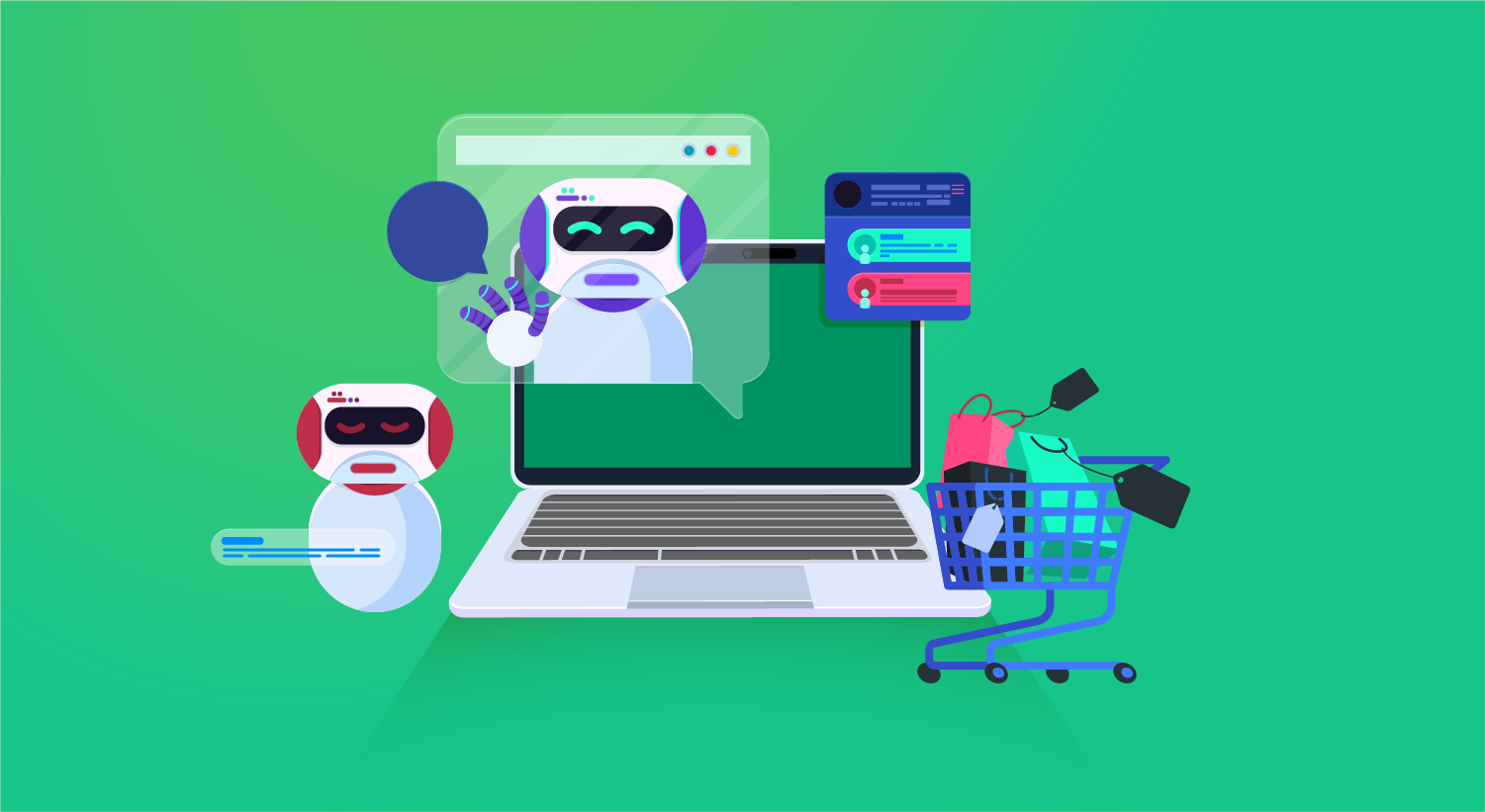
An ecommerce chatbot is an automated conversational assistant used by online stores to support shoppers throughout the buying journey. It can answer product questions, recommend items based on preferences, assist with checkout, track orders, and handle returns without requiring a human agent.
Most ecommerce chatbots are powered by artificial intelligence and natural language processing, which allow them to understand customer queries and respond in real time. They are typically deployed on ecommerce websites and messaging platforms such as Facebook Messenger, WhatsApp, and Instagram.
Types of Ecommerce Chatbots
Not all ecommerce chatbots function the same way. Depending on the business model, product complexity, and support volume, online stores use different chatbot approaches.
1. Rule Based Chatbots
Rule based chatbots follow predefined conversation paths. They rely on buttons, decision trees, and scripted responses to guide users. These bots work well for simple product discovery, order tracking, FAQs, and structured checkout flows where conversations are predictable.
Best suited for stores with limited product variations and straightforward support needs.
2. AI Powered Chatbots
AI powered chatbots use natural language processing to understand customer queries in free text format. Instead of fixed scripts, they interpret intent and respond dynamically.
These bots handle complex product questions, personalized recommendations, and multi step buying decisions. They are better suited for larger catalogs and high interaction volume.
3. Conversational Commerce Bots
Conversational commerce bots are designed specifically to drive purchases within chat interfaces. Customers can browse products, receive suggestions, add items to cart, and sometimes complete transactions without leaving the chat window. These bots focus on revenue generation rather than just support automation.
4. Support Automation Bots
Support automation bots handle post purchase queries such as order tracking, returns, refunds, delivery updates, and account management. They reduce workload on support teams while maintaining quick response times. They are commonly integrated with help desk or CRM systems.
5. WhatsApp and Messenger Bots
These chatbots operate directly on messaging platforms like WhatsApp and Facebook Messenger. They allow brands to engage customers on channels they already use daily. They are effective for product launches, flash sales, customer updates, and direct shopping conversations.
Best Ecommerce Chatbot Examples from Leading Brands
1. Michael Kors
Michael Kors focused its efforts in 2018 on developing and launching an enhanced chatbot for its global audience. The bot not only offers existing offers and product recommendations but also assists the users to make the right purchase and redirecting them to their e-commerce store to finish the purchase. The bot is also equipped with FAQ support and the ability to hand users off to a human customer service representative when the moment arises.

2. Mac Miller Store
The Live Nation Bot for the e-commerce store of Mac Miller, provides a seamless way for fans to purchase late singer’s albums, merchandise, and music including t-shirts, sweatshirts, digital downloads. The HappyFox powered chatbot is placed next to the online store bringing sales and service together on each webpage.

Allowing fans to get help with their order – tracking status, digital order, changing the existing order, requesting new items, or providing feedback, the chatbot helps simulate the shopping experience that buyers get in a retail store.
3. SnapTravel
Offering hotel deals over messaging, SnapTravel leverages artificial intelligence to help its customers find and book hotel rooms bookings over a conversational interface. SnapTravel doesn’t need to get anyone to download its app in order to work and offers its services on intimate platforms like SMS and Facebook Messenger.
Using Natural Language Processing (NLP) and artificial intelligence, the bot offers visitors competitive pricing and claims to have its own “secret deals”, according to SnapTravel’s FAQ. With users getting impatient about their shopping experience with every passing second, people have reported finishing their buying journey within 15 mins!
3. 1-800-Flowers
1-800-Flowers was one of the first e-commerce bots on Facebook Messenger. Being an immediate success, it was reported that just two months into the launch, 70% of the company’s Facebook chatbot orders came from brand new customers, who in fact were younger than the company’s typical customer.
No longer just florists, automation and innovation has resulted into the company transforming into a ecommerce company, with 88% of its business residing online. Shoppers can browse through a collection products and finish the purchase journey without ever leaving the messenger.
4. H&M
With the bot and the agents available 24*7, the H&M chatbot aims to enrich every visitors’ buying experience. The shopping assistant bot helps fashionistas with great outfit possibilities in real-time and guides them to their online store shopping cart till the checkout page that aligns with their purchase desires.
The company also implemented a virtual assistant on their website that can help users track orders, check stock, take payments, or even talk to a live agent.
5. Domino’s Pizza
In an effort to expand its digital ordering service, Domino’s implemented the Facebook messenger chatbot, taking the easy ordering experience to 15 platforms including Amazon Echo, Ford Sync, Samsung TV, Apple Watch, and via emoji. Generating revenue of 3.62 billion U.S. dollars worldwide in 2019, Domino’s Pizza allows consumers to order from the full menu without ever leaving Messenger further boosting digital sales through a fantastic user experience.
How to Implement an Ecommerce Chatbot
Implementing an ecommerce chatbot starts with defining a clear objective. Some stores focus on product recommendations and sales assistance, while others prioritize order tracking and post purchase support. The goal determines the type of chatbot and level of automation required.
Next, choose a chatbot platform that integrates with your ecommerce system, CRM, and support tools. Seamless integration ensures accurate product data, order information, and customer history are available within conversations.
Design conversation flows based on real customer questions. Identify common buying queries, delivery concerns, return policies, and upsell opportunities. Keep interactions simple and outcome focused.
Before launch, test the chatbot across devices and channels. Monitor how customers interact with it and refine responses based on real usage data.
A well implemented ecommerce chatbot should not replace human support entirely. Instead, it should handle repetitive interactions and escalate complex issues when needed.
Conclusion
Ecommerce chatbots are now used for more than answering basic questions. As seen in the examples above, they support product discovery, assist during checkout, and automate post purchase service across channels. For online stores evaluating chatbot solutions, the right implementation can improve sales performance while reducing support workload.
If you’re looking to see how HappyFox chatbot can help retailers transform their e-commerce business, increase sales, and take conversational commerce to the next level, connect with us today!
FAQ
1. What are examples of ecommerce chatbots?
Examples of ecommerce chatbots include Michael Kors for product discovery, 1-800-Flowers for Messenger-based ordering, H&M for virtual shopping assistance, Domino’s for conversational ordering across platforms, SnapTravel for booking through chat, and Mac Miller Store for automated merchandise sales and order support.
2. How do ecommerce chatbots increase sales?
Ecommerce chatbots increase sales by guiding shoppers to relevant products, answering buying questions instantly, recommending complementary items, and assisting during checkout. Faster responses improve buying confidence and reduce drop-offs during the purchase process.
3. Can ecommerce chatbots handle payments?
Some ecommerce chatbots allow customers to complete purchases within chat interfaces, especially on platforms like Facebook Messenger or WhatsApp. Others redirect users to secure checkout pages while continuing to assist during the process.
4. Where can ecommerce chatbots be deployed?
Ecommerce chatbots can be deployed on online stores, mobile apps, and messaging platforms such as WhatsApp, Facebook Messenger, and Instagram. Many brands use multiple channels to reach customers where they already communicate.
5. How much does an ecommerce chatbot cost?
The cost of an ecommerce chatbot varies based on features, automation level, and integration requirements. Pricing typically ranges from entry-level monthly subscriptions to enterprise solutions with advanced AI capabilities.