Do you want to build an e-commerce or an internet business online? If yes, picking the right payment gateway provider to support your purchases/orders is crucial.
Payment Gateways are merchant services provided by an e-commerce application service provider that authorizes credit card or direct payments processing for e-businesses. Payment solutions charge fees to offer gateways. Mostly, companies pay a portion of the aggregated sales and a per-transaction fee, although other pricing strategies exist.
There are a ton of payment service providers in the market and each with their own benefits and limitations. Let us take a look at two of the most popular options – Stripe and Braintree and try to conclude which is better for e-commerce and online payments.
This blogpost will explain how these two payment systems fare when it comes to Getting Started, Payment Methods, Pricing, Integrations, and Security.
Getting Started
It is essential to understand that advanced coding knowledge or developer assistance is required to set up and make the most out of the two payment providers. Stripe and Braintree are built on APIs that are compatible with programming languages such as PHP, Python, Ruby/Ruby on Rails, and Node.js. These APIs explained in detail on their API documentation. In the case of developing apps on various platforms, the payment platforms have APIs for iOS and Android to make it easier for cross-platform expansions. Both Stripe and Braintree will continually update their payment infrastructure as your business scales.
For any assistance, the support documentation for Stripe and Braintree is comprehensive and should cater to all queries that may arise during set up.
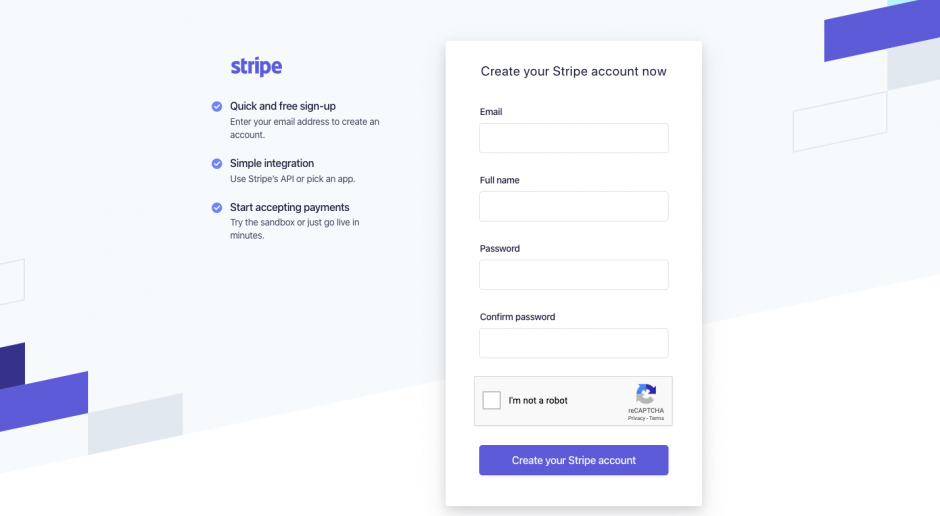
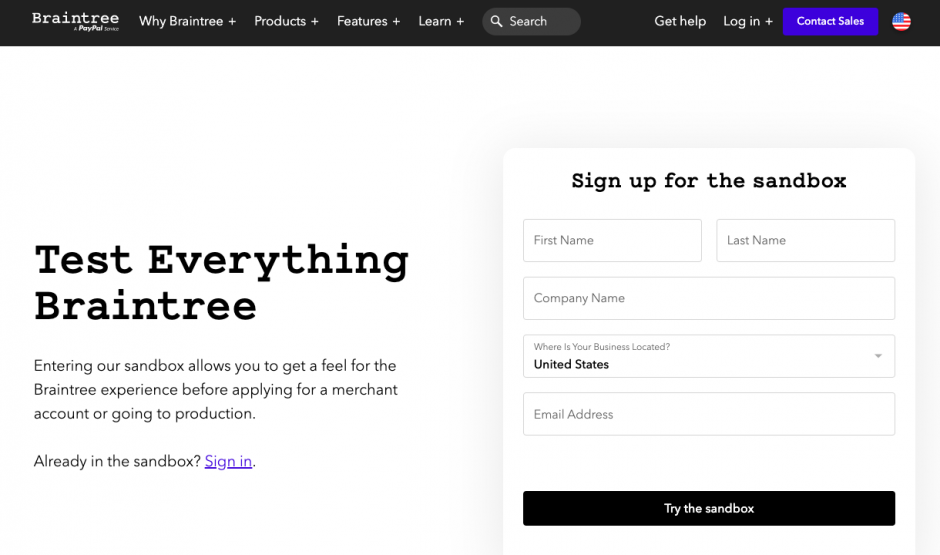
In case you would want to try out the gateways, both Braintree and Stripe offer sandbox accounts. Sandboxes allow you to get a feel for the payment experience before going live.
Payment Methods
If you run an e-commerce store, chances are that you support multiple payment methods – not limited to the popular Visa/Mastercard/AmericanExpress(Amex). Braintree and Stripe accept payment methods like Discover, Maestro, JCB, Apple Pay, Android Pay, Pay with Google and Diner’s Club in addition to the traditional credit/debit cards.
If you’re targeting an e-commerce store in the Asian market, Stripe is your best bet. Stripe allows users to pay via AliPay and WeChat Pay. Stripe and Braintree payment gateways offer ACH (Automatic House Clearing) which are direct payments to your bank account.
Stripe also has its own payment method – Stripe Checkout. 1-tap-payments and bitcoin support are a few of its payment processing features.
Braintree on the other hand, integrates seamlessly with PayPal. Venmo – Paypal’s digital wallet can also be used to do transactions using Braintree.
Pricing
There are no major differences between Braintree and Stripe pricing models. Both the payment platforms charge a fixed 30-cent fee and an additional fee of 2.9% for every e-wallet or credit card payments. Stripe and Braintree charge an extra 1% for international transactions. If currency conversion is required, an additional 1% fee will be levied on both platforms. Braintree supports transactions in over 135 currencies whereas stripe supports over 130 currencies.
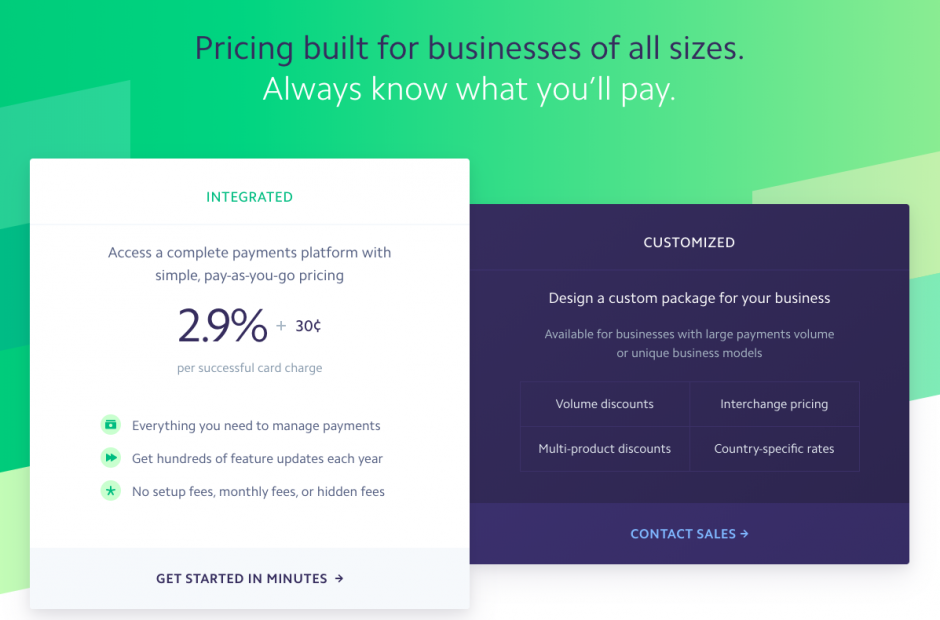
With ACH debits, the charge is 0.75% for Braintree, 0.8% for Stripe. Both of them are capped at $5 for direct debits. While processing refunds, both Braintree and Stripe refund the entire transaction amount including the 30 cent charge. Bitcoin payments and direct debits above $625 incur a fee of $5. A flat $15 fee is assessed for each chargeback claim by both Braintree and Stripe.
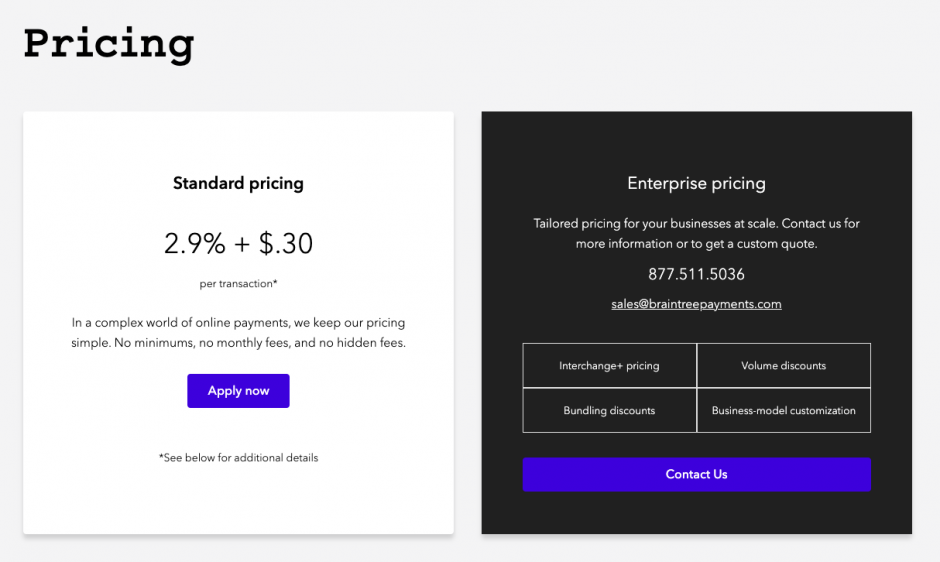
For businesses with large payment volumes, both Stripe and Braintree offer customized pricing plans with volume discounts, Interchange pricing, Multi-product discounts, and Country-specific rates. However, the extent to which these monthly fee discounts/rate-deductions apply is not mentioned on their website.
Integrations
Stripe integrates with over 300 third party tools in the areas of Accounting, analytics, ordering, CRM, POS, financing, forms, inventory management, invoicing, mobile app payments, notifications, transaction monitoring, relay, referral marketing, recurring subscriptions, user management, and shipping
Braintree’s third-party integrations are less when compared to Stripe, but it does integrate with over 50 apps covering major business needs like recurring billing, accounting, etc.
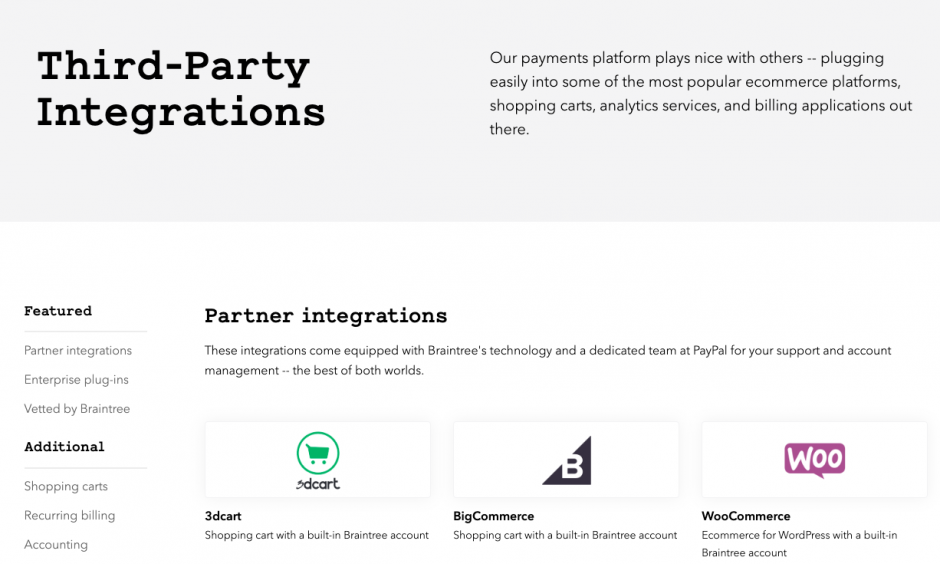
When it comes to billing analytics, both Braintree and Stripe integrate with tools like Baremetrics, ChartMogul, etc. Similarly, for accounting and invoicing, Stripe integrates with Freshbooks, and Braintree integrates with Elorus.
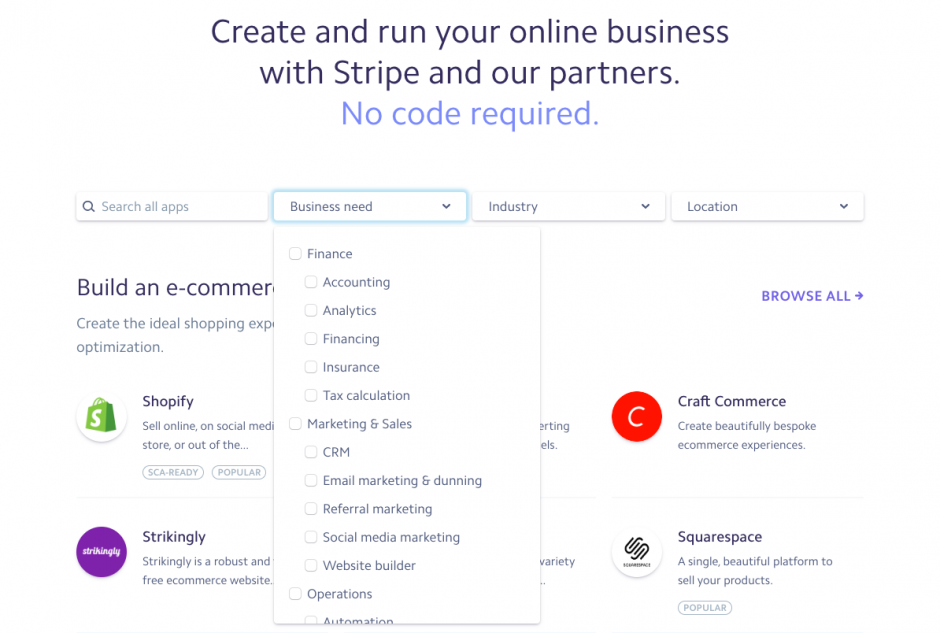
Stripe enjoys the advantage of integrating with popular Helpdesk and CRM tools like HappyFox, Salesforce, etc. Contextual payment information within the help desk can help supplement support agents for any order-related queries.
Owing to a sheer large number of native third-party integrations catering to different business needs, Stripe is a clear winner in this category. Whether Stripe or Braintree offers an advantage depends on which other integrations your organization is looking for.
Both Braintree and Stripe integrate with Zapier – allowing access data on many other 1000+ apps and services.
Security
Stripe and Braintree are fully PCI compliant. Both tools provide modern security infrastructure to keep order and customer information safe and secure. Stripe has a separate product – Radar, which uses machine learning for fraud protection. Stripe and Braintree provide advanced security features like IP whitelisting, two-factor authentication and data encryption.
Bottom Line
There is no clear winner in this battle. Both the providers offer similar fees, competitive feature sets, enhanced security and provide lots of support for developers for hassle-free setup. Irrespective of your choice, you can rest assured that your existing site infrastructure will likely work with either platform.
So where is the differential? Braintree offers free processing fee for up to $50,000 – This may come in handy if you’re a small business focusing primarily on domestic payments. If you’re looking at global expansions, especially in Asian markets, Stripe is preferred – owing to integrations with Alipay and WeChat. You must also look into the integrations list offered by Stripe and Braintree and check for the SaaS tools you already use in your organization like Shopify, ChartMogul, etc.
It is recommended to get a developer’s help to unlock the full potential of these payment gateways in the manner in which you would want them to function. At HappyFox, we use both Stripe and Braintree in our payment architecture and we couldn’t live without either of them!
In a nutshell, the decision should be based on your business requirements, the different payment methods your customers like, and the availability of payment platforms in the regions in which you would like to expand.
HappyFox is an omnichannel helpdesk, with integrations with payment platform tools like Stripe. Want to know more? Then Schedule a demo with us to see things in action.
Frequently Asked Questions
Q1: What are the main differences between Stripe and Braintree pricing?
A: There are no major differences between Braintree and Stripe pricing models. Both charge a fixed 30-cent fee plus 2.9% for every credit card or e-wallet payment. Both charge an extra 1% for international transactions and an additional 1% if currency conversion is required. ACH debits cost 0.75% for Braintree and 0.8% for Stripe, both capped at $5. Both assess a flat $15 fee for chargebacks. Braintree offers free processing for up to $50,000, which may benefit small businesses.
Q2: Which payment methods do Stripe and Braintree support?
A: Both platforms accept major credit cards including Visa, Mastercard, American Express, Discover, Maestro, JCB, and Diner’s Club. They also support Apple Pay, Android Pay, and Pay with Google. Stripe offers AliPay and WeChat Pay for Asian markets, plus Stripe Checkout with 1-tap payments and bitcoin support. Braintree integrates seamlessly with PayPal and Venmo. Both offer ACH direct bank payments. Braintree supports 135 currencies while Stripe supports over 130.
Q3: Do I need coding knowledge to use Stripe or Braintree?
A: Yes, advanced coding knowledge or developer assistance is required to set up and maximize both payment providers. Stripe and Braintree are built on APIs compatible with programming languages like PHP, Python, Ruby/Ruby on Rails, and Node.js. They also provide APIs for iOS and Android for cross-platform app development. Both offer comprehensive support documentation and sandbox accounts for testing before going live, but developer help is recommended to unlock their full potential.
Q4: Which platform has better third-party integrations?
A: Stripe is the clear winner for integrations, connecting with over 300 third-party tools covering accounting, analytics, CRM, POS, invoicing, subscriptions, and more. Braintree integrates with over 50 apps covering major business needs. Stripe integrates with popular tools like HappyFox, Salesforce, and Freshbooks. Both integrate with Zapier for access to 1000+ additional apps. The choice depends on which specific integrations your organization needs.
Q5: Are Stripe and Braintree secure payment platforms?
A: Yes, both platforms are fully PCI compliant and provide modern security infrastructure to protect order and customer information. Both offer advanced security features including IP whitelisting, two-factor authentication, and data encryption. Stripe has a dedicated fraud protection product called Radar that uses machine learning to detect and prevent fraudulent transactions. Both platforms continually update their security as businesses scale.
Q6: Which payment gateway is better for international businesses?
A: Stripe is preferred for global expansion, especially in Asian markets, due to integrations with AliPay and WeChat Pay. Stripe supports over 130 currencies while Braintree supports 135 currencies. Both charge the same international transaction fees (1% extra plus 1% for currency conversion). For businesses targeting domestic payments under $50,000, Braintree’s free processing offer may be more attractive. The decision should be based on target markets and customer payment preferences.
Q7: How do refunds and chargebacks work on both platforms?
A: Both Braintree and Stripe handle refunds identically, refunding the entire transaction amount including the 30-cent transaction fee. For chargebacks, both platforms assess a flat $15 fee per claim. Bitcoin payments and direct debits above $625 incur a $5 fee on both platforms. This uniform approach to refunds and chargebacks makes the platforms comparable in how they handle transaction disputes and reversals.
Q8: Which payment gateway should I choose for my business?
A: There is no clear winner as both offer similar fees, competitive features, and strong security. Choose Braintree if you’re a small business processing under $50,000 domestically and need PayPal/Venmo integration. Choose Stripe for global expansion, Asian market targeting (AliPay/WeChat), or if you need extensive third-party integrations. Consider your business requirements, customer payment preferences, geographic expansion plans, and which integrations you need with existing tools before deciding.