Buyers are asking AI what to buy. See whether it recommends your brand.
Buyer research is moving into the conversation
You’re shopping for a gift for someone who loves coffee. Your budget is $50. You open ChatGPT and ask:
“Which specialty coffee gift sets would you recommend under $50?”
It suggests a few brands. You ask how they compare, then which one it would choose. You now have a shortlist before visiting a single brand’s website.
For brands, that shift creates a blind spot in your traffic report: when someone asks AI for a recommendation, does your brand show up?
Answer engine optimization (AEO) focuses on how your brand appears in AI-generated answers—including whether it gets recommended.
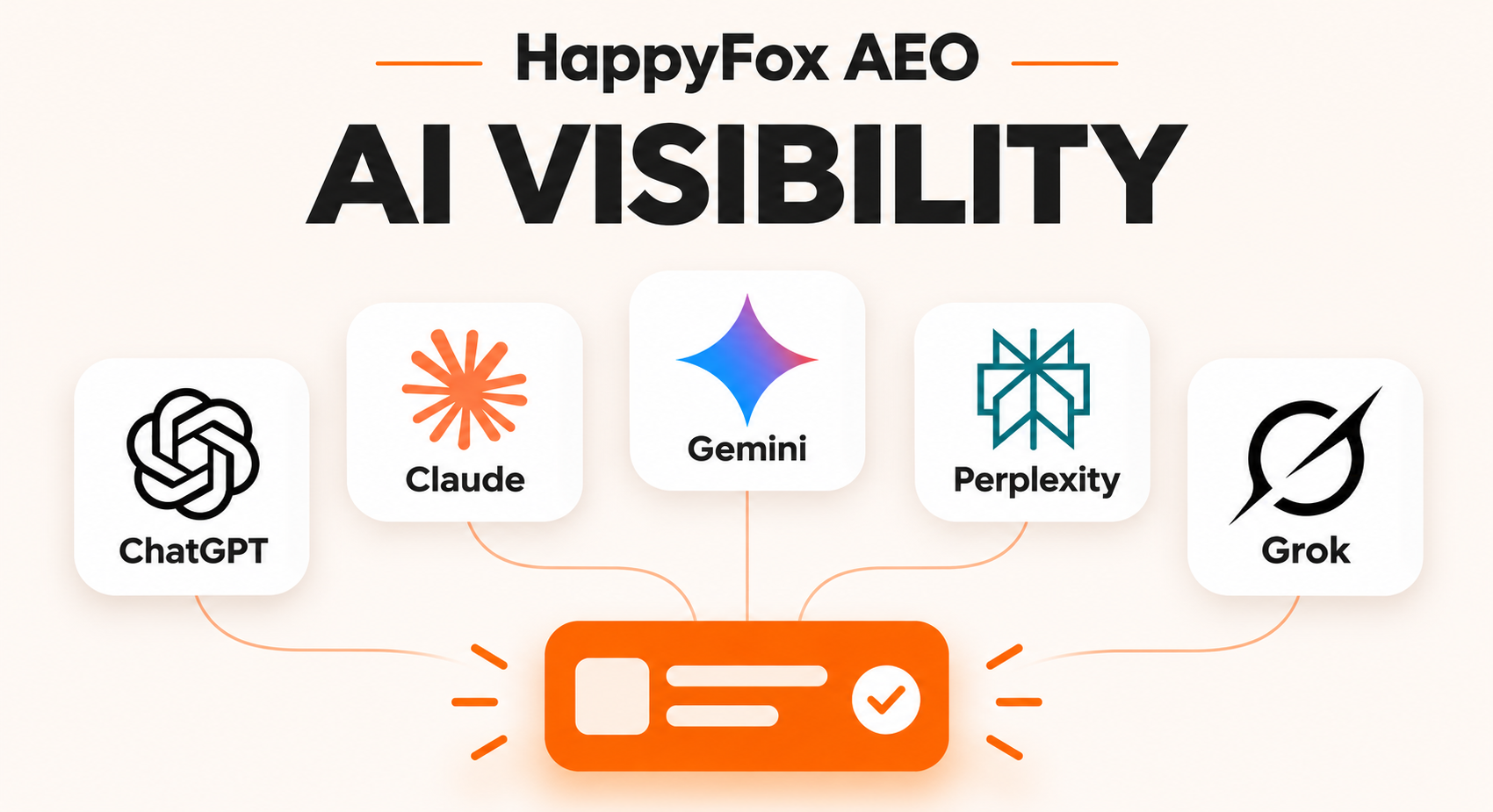
Today, we’re launching HappyFox AEO to help you see those answers, compare your brand with competitors, and inspect the sources they cite.
Here’s what we found when we asked two engines about coffee.
One coffee question. Two different answers.
We tested a similar coffee question in ChatGPT and Claude. On November 16, we captured one answer from each engine:
What are good specialty coffee gift sets under $50 for a U.S. shopper?
| ChatGPT | Claude |
|---|---|
| Led with Onyx Coffee Lab | Named Bean Box first |
| Cited Onyx’s Discovery Box page | Cited a third-party gift guide |
Same question. Different brands. Different sources.
If you sell coffee, those answers give you something concrete to investigate. Which products appeared? How were they described? What information would a shopper find on the cited pages?
These two captured answers are a snapshot. They also show why checking one engine once gives you a limited view.
A mention isn’t a recommendation
Your brand can appear in an answer while another gets the recommendation. HappyFox AEO tracks those outcomes separately, so you can see more than whether your name appeared.
Start with your website, review suggested questions and competitors, and choose what to track. Follow questions about budgets, preferences, use cases, and comparisons.
See who shows up—and what gets cited
Open the captured answers to investigate:
- Your brand: Was it mentioned or recommended?
- Your competitors: Who appeared alongside you?
- The sources: Which pages did the answer cite?
- The changes: What happened when the same question was checked again?
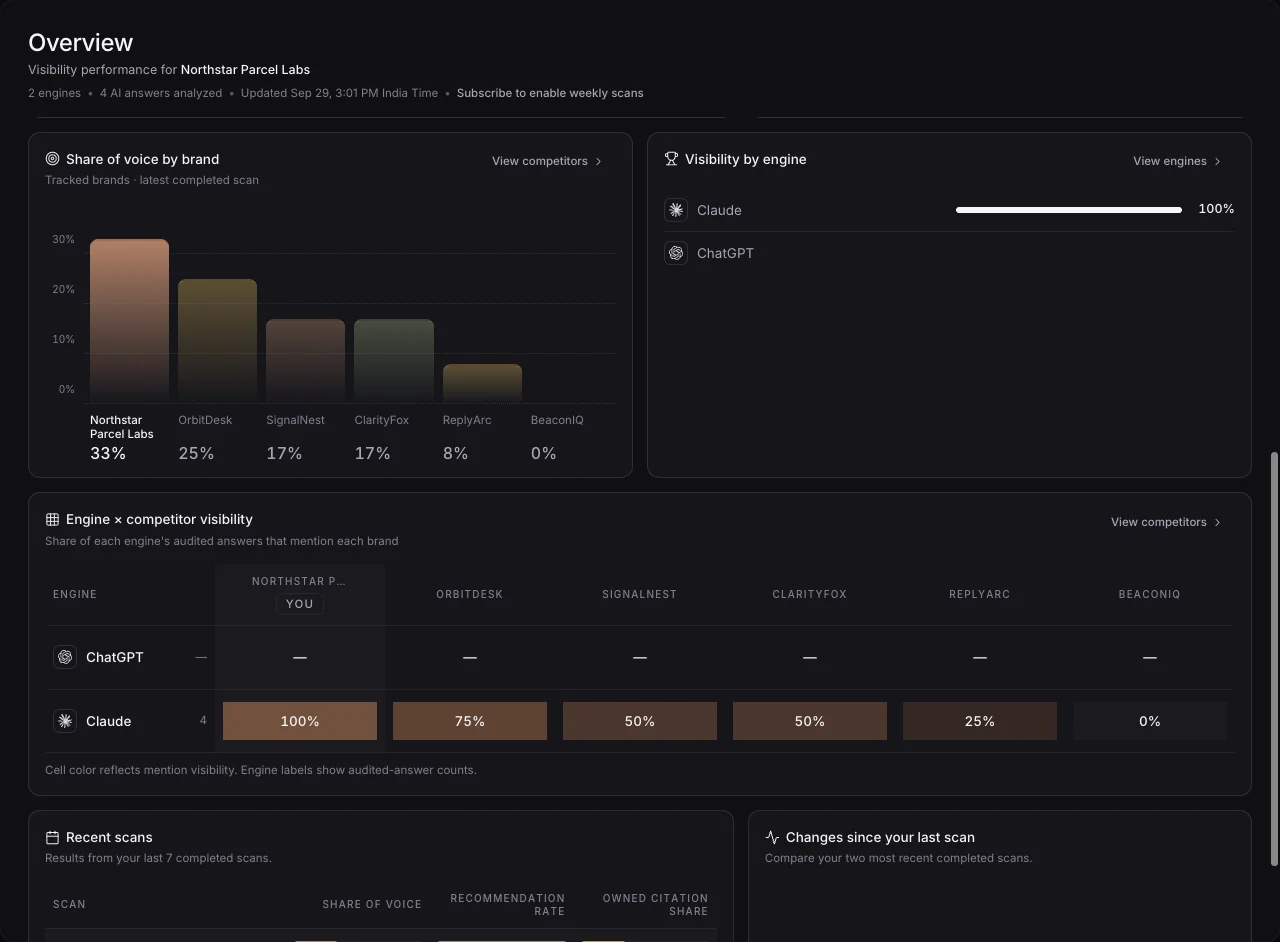
Scan history lets you revisit dated answers. Check that the questions and engine coverage are comparable before interpreting a change.
Give your next content decision a starting point
Return to the coffee example.
A product page and a third-party gift guide were cited. Read those pages alongside the answers. Look at which buyer requirements they address. Then ask: does your own content clearly explain the details someone choosing a gift needs?
That gives your team a focused brief: which question to answer, which page needs attention, and which facts to verify.
You can also connect HappyFox AEO to a compatible assistant, including ChatGPT or Claude, and ask:
“Find questions where other brands get recommended and we’re missing. Help me turn one finding into a content brief.”
Your assistant can use authorized AEO data to help prepare briefs, reviews, and reports.
Find out whether AI recommends your brand
Pick the questions your buyers ask, track which brands make the cut, and inspect the pages cited in captured answers.
HappyFox AEO Starter — $25/month
- Coverage: One brand across ChatGPT and Claude.
- Capacity: 20 tracked prompts, five competitors, and 160 monthly prompt checks. Each check covers one prompt on one engine.
- Free trial: Try Starter for 14 days, including one baseline scan for up to 20 prompts, triggered when you add your first questions. Scheduled weekly scans require a paid subscription and must be enabled, subject to available prompt checks.
Start your free trial → | Compare plans →